Biostimulators (Radiesse, Sculptra)
Stimulate collagen naturally for long-lasting volume, structure, and youthful skin

Biostimulators (Radiesse, Sculptra)
Stimulate collagen naturally for long-lasting volume, structure, and youthful skin

Elham Aesthetic Art provides Sculptra and Radiesse biostimulator treatments in North York, Ontario, for clients across Toronto, Vaughan and Thornhill. These are collagen stimulators rather than conventional fillers: instead of adding volume that simply sits where it is placed, they prompt your own skin to rebuild collagen over the months that follow. Every plan is assessed and injected by Elham Mousavi, an aesthetic medicine specialist with more than 26 years of clinical experience.
What a biostimulator is, and how it differs from a filler
A biostimulator is an injectable that works by triggering your own collagen production, rather than by filling a space. A conventional hyaluronic acid filler adds volume the moment it is placed and holds that shape until the body breaks it down. A biostimulator is closer to a prompt: the material is placed in the deeper layers of the skin, the body responds to it, and new collagen builds around it over weeks and months.
That difference decides what these treatments are good at. Fillers are precise and immediate, which is why they remain the right choice for lips and for sharply defined corrections. Biostimulators work across a broader area and improve the quality and thickness of the skin itself, which is why they suit gradual volume loss, flattening cheeks, a softening jawline, and crepey skin on the neck, chest and hands.
The two categories are complementary rather than competing, and it is common to use both in one plan. If you are weighing them up, the dermal filler page covers the hyaluronic acid side, and the face contouring page explains how the two are combined to rebuild facial structure.
Sculptra and Radiesse compared
Both products stimulate collagen, but they are made of different materials and work on different timelines, so they are not interchangeable. Radiesse gives structure straight away and builds collagen behind it. Sculptra gives almost nothing on the day and builds steadily for months. Which one is used, and where, is a clinical decision made at your assessment.
| Sculptra | Radiesse | |
|---|---|---|
| Material | Poly-L-lactic acid (PLLA) | Calcium hydroxylapatite (CaHA) microspheres in a gel carrier |
| How it works | Almost entirely collagen stimulation; the product itself is absorbed | Immediate lift from the gel carrier, then collagen stimulation as the gel absorbs and the microspheres remain |
| When you see the change | Gradually, over roughly six weeks to three months | On the day, with continued improvement over the following months |
| Typical duration | Up to about two years after a completed course | Around 12 to 18 months, depending on the area |
| Usual course | A series, commonly two to three sessions, spaced about four to six weeks apart | Often a single session per area, reviewed afterwards |
| Best suited to | Overall facial volume loss, thin or crepey skin, hollow temples, a face that has flattened rather than dropped | Jawline and chin definition, deeper folds, and, in a diluted form, skin quality on the neck, chest and hands |
| Not used for | Lips, or any correction that has to look finished on the day | Lips — calcium hydroxylapatite is not used for lip augmentation |
The material and duration facts above are consistent with the injectable categories described by the American Society of Plastic Surgeons and the regulatory overview published by the U.S. Food and Drug Administration. Individual results vary, and the durations above are planning ranges rather than guarantees.
Sculptra in Toronto and North York
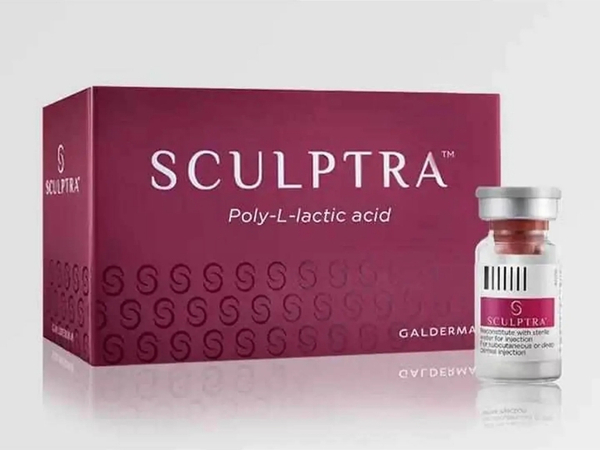
Sculptra is injectable poly-L-lactic acid, and it treats the cause of age-related flattening rather than the symptom. Collagen loss begins in the twenties and continues steadily; the face does not simply sag, it loses its underlying scaffold, and the skin above it thins. Sculptra is placed in the deeper layers, where it prompts the skin to rebuild that scaffold with its own tissue.
Because the change is built rather than injected, nothing dramatic happens on the day of treatment. Most people notice the difference somewhere between six weeks and three months, and the people around them tend to notice that someone looks well rather than that someone has had something done. That is the reason it suits clients who want the result to be unattributable.
A course is normally two to three sessions spaced four to six weeks apart, and the plan is set at consultation according to how much volume has been lost. Where skin thinness rather than volume is the main complaint, Sculptra is often planned alongside skin boosters or microneedling, which work on the surface while Sculptra works underneath.
Areas commonly treated with Sculptra
Radiesse in Toronto and North York
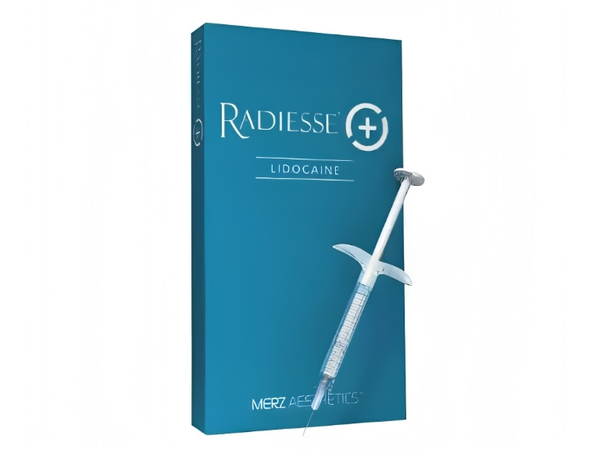
Radiesse is calcium hydroxylapatite suspended in a gel carrier, which is what allows it to do two things at once. The gel provides lift on the day it is placed. Over the following months the gel is absorbed and the calcium microspheres stay behind, and the skin lays down collagen around them. The immediate result is structural; the lasting result is your own tissue.
That combination makes it the more useful of the two where definition is the goal — a jawline that has lost its edge, a chin that no longer projects, folds that have deepened enough to cast a shadow. It is a firmer product than a hyaluronic acid filler, which is precisely why it holds a line and why it is not used in the lips.
Radiesse can also be diluted well beyond its normal concentration and placed in a thin layer under the skin. Used that way it adds no volume at all; the point is collagen, and the areas that benefit most are the ones that give age away first — the neck, the chest and the backs of the hands. Clients considering this alongside tightening treatments will find the HIFU page and the thread lift page useful for comparison.
Areas commonly treated with Radiesse
What a treatment plan looks like
Biostimulator planning starts from the concern, not from the product. The assessment establishes where volume has actually been lost, how much collagen support is left, and whether the priority is structure, skin quality or both — and the product follows from that. The table below shows how the common concerns are usually approached. Your own plan is confirmed at consultation.
| Concern | Usually treated with | Typical course | When the change shows |
|---|---|---|---|
| Flattened cheeks, general facial volume loss | Sculptra | 2 to 3 sessions, 4 to 6 weeks apart | 6 weeks to 3 months |
| Hollow temples | Sculptra | 2 to 3 sessions | 6 weeks to 3 months |
| Softening jawline, chin projection | Radiesse | Usually 1 session per area | Immediately, improving for months |
| Deep nasolabial folds or marionette lines | Radiesse, sometimes with filler | 1 session, reviewed at 4 weeks | Immediately |
| Crepey neck or décolletage | Diluted Radiesse | 1 to 2 sessions | 6 to 12 weeks |
| Thin, volume-depleted hands | Radiesse | 1 session, reviewed | Immediately, improving for months |
| Thin skin with little volume loss | Sculptra, often with skin boosters | 2 to 3 sessions | 6 weeks to 3 months |
Who biostimulators suit — and who they do not
Biostimulators reward patience and a reasonable starting point. They work best on someone whose skin still has the capacity to respond, and who wants a change that arrives quietly. They are the wrong treatment for anyone who needs a defined result by a fixed date, and they are not a substitute for surgery where the tissue has descended rather than deflated.
A good fit if you
Treatment is deferred or declined if you
This list is a guide, not a screening tool. Your full medical history, medications and previous injectable treatments are reviewed at consultation before anything is booked.
Before and after your appointment
Before your appointment
Avoid alcohol for about 24 hours beforehand, and tell us about any blood-thinning medication or supplement — aspirin, fish oil, high-dose vitamin E — so we can advise whether to pause it. Both of these reduce bruising rather than affecting the result. Come without makeup where possible, and let us know if you have any dental work planned, since injectable treatment is normally spaced away from it.
After your appointment
Expect some swelling, tenderness and occasional bruising for a few days; most people return to normal activity the same day. Heat, saunas, strenuous exercise and alcohol are best avoided for the first 24 to 48 hours. After Sculptra you will be asked to massage the treated areas for several minutes, several times a day, for roughly the first five days — this is a standard part of the protocol and it matters. You will be given your own written aftercare instructions on the day, and those take precedence over anything general written here.
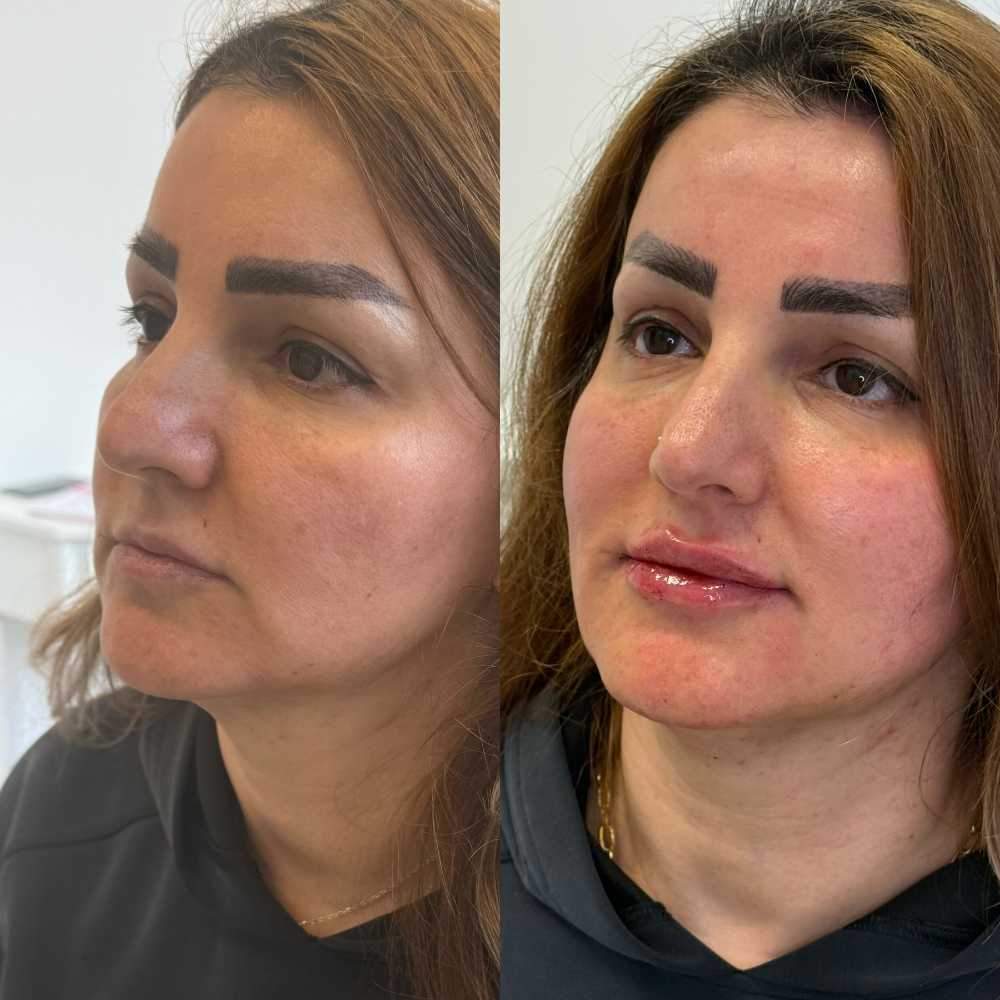
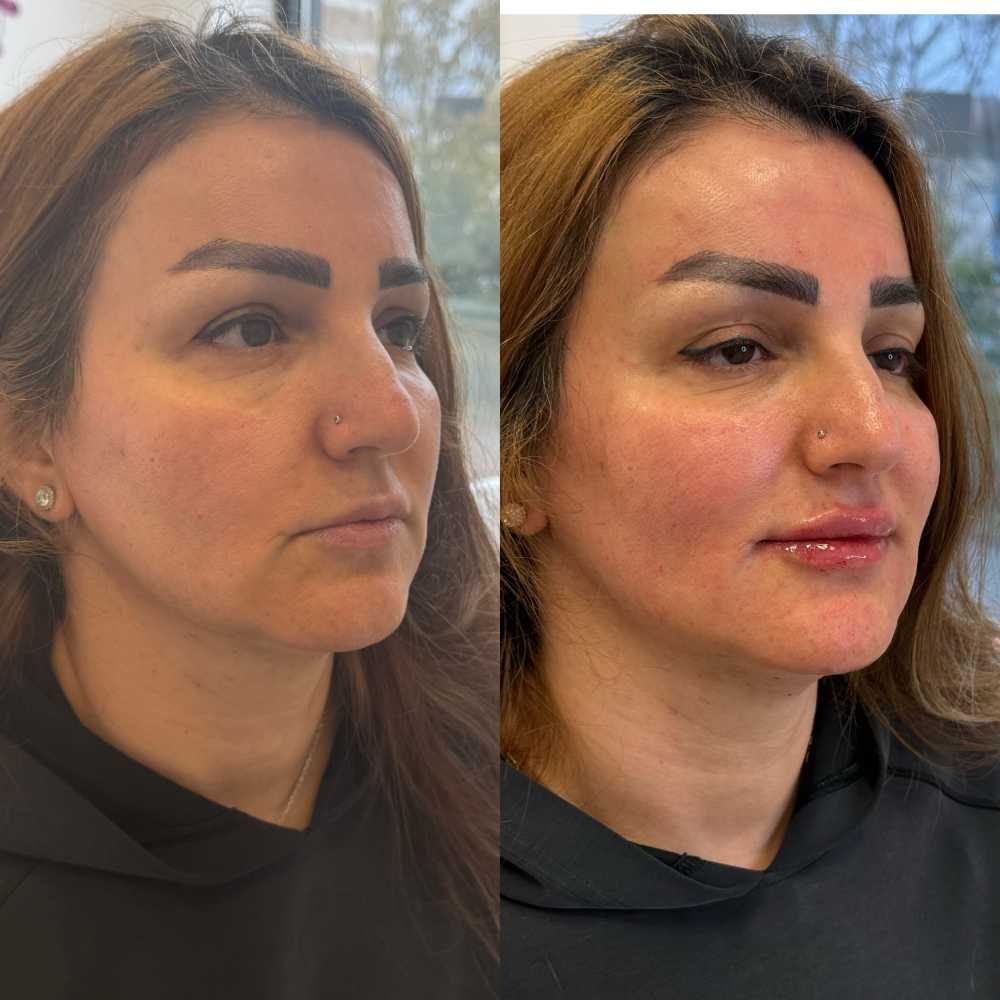
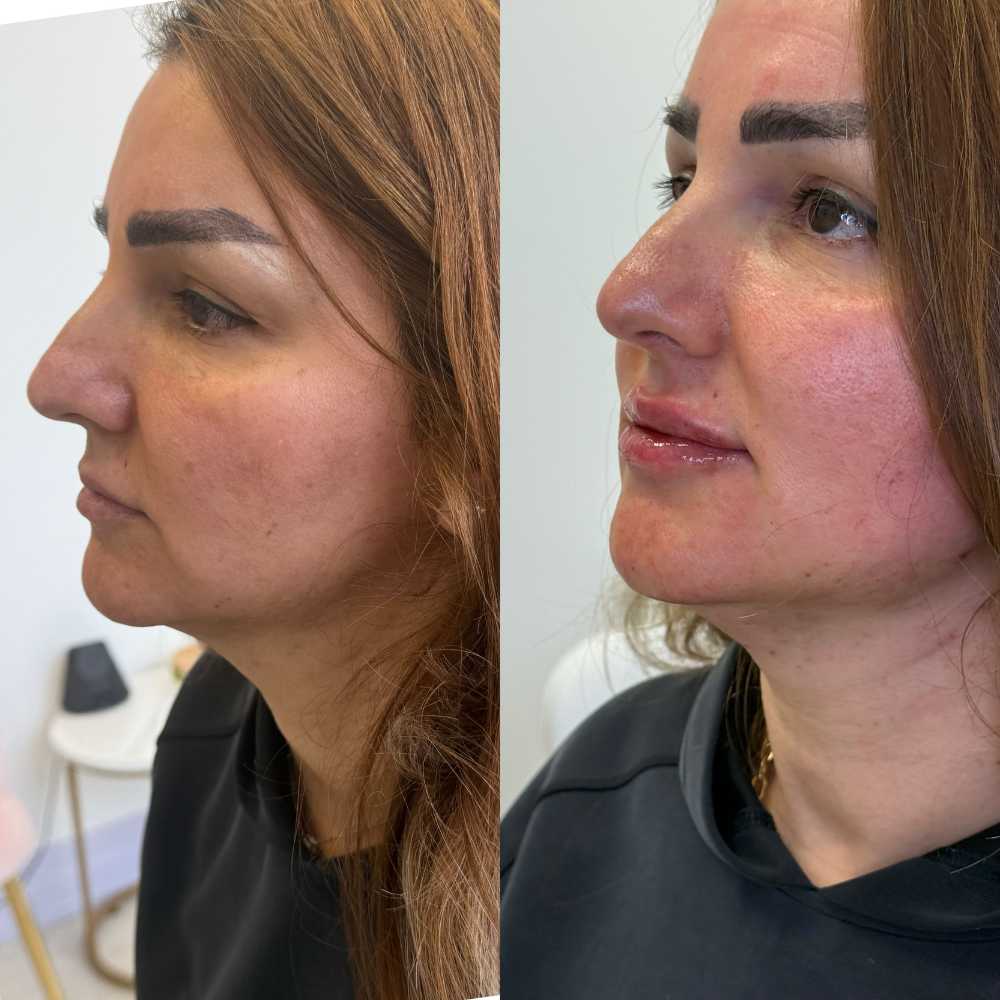
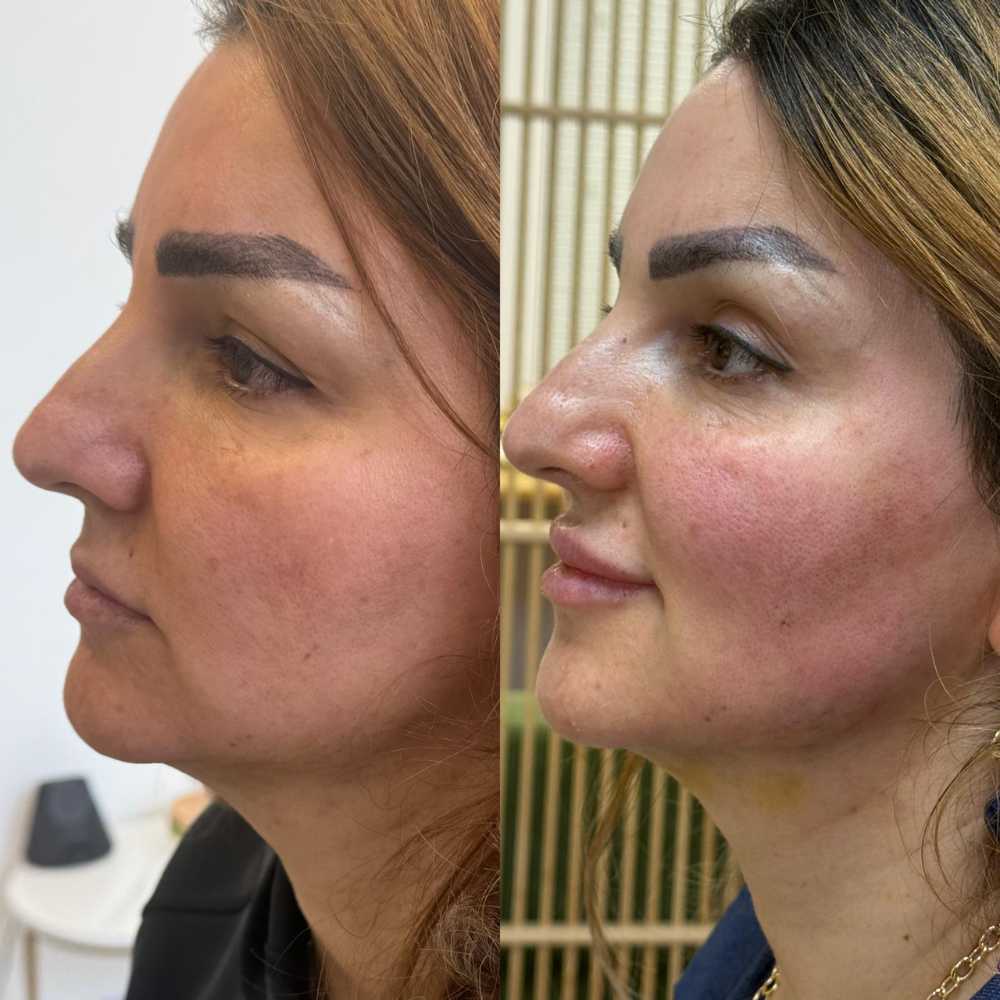
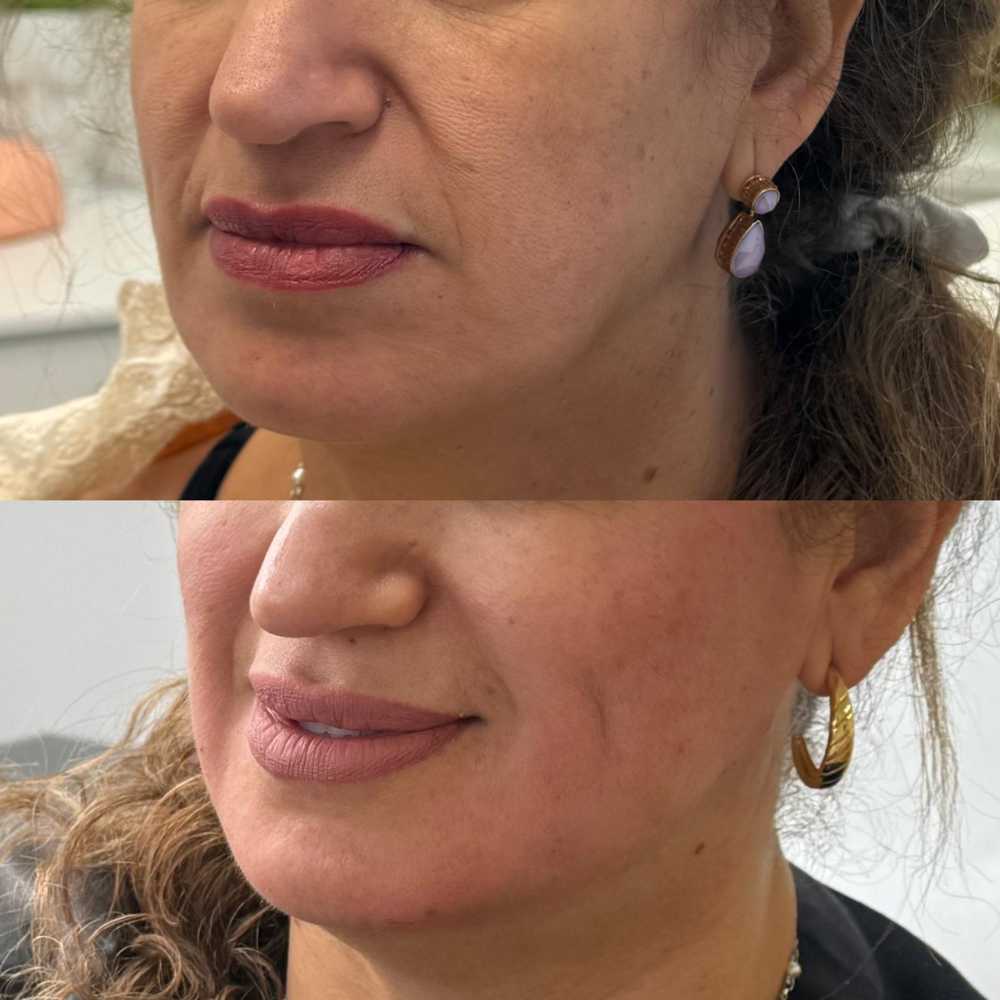
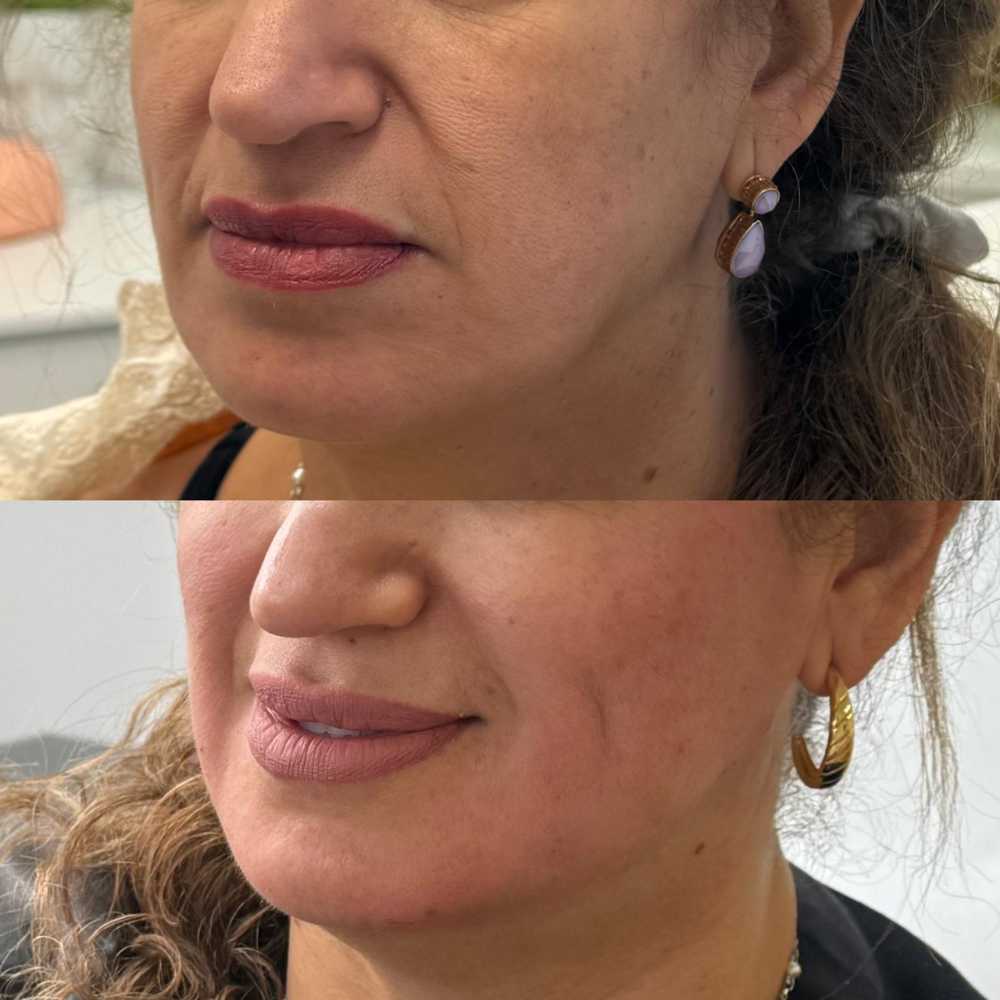
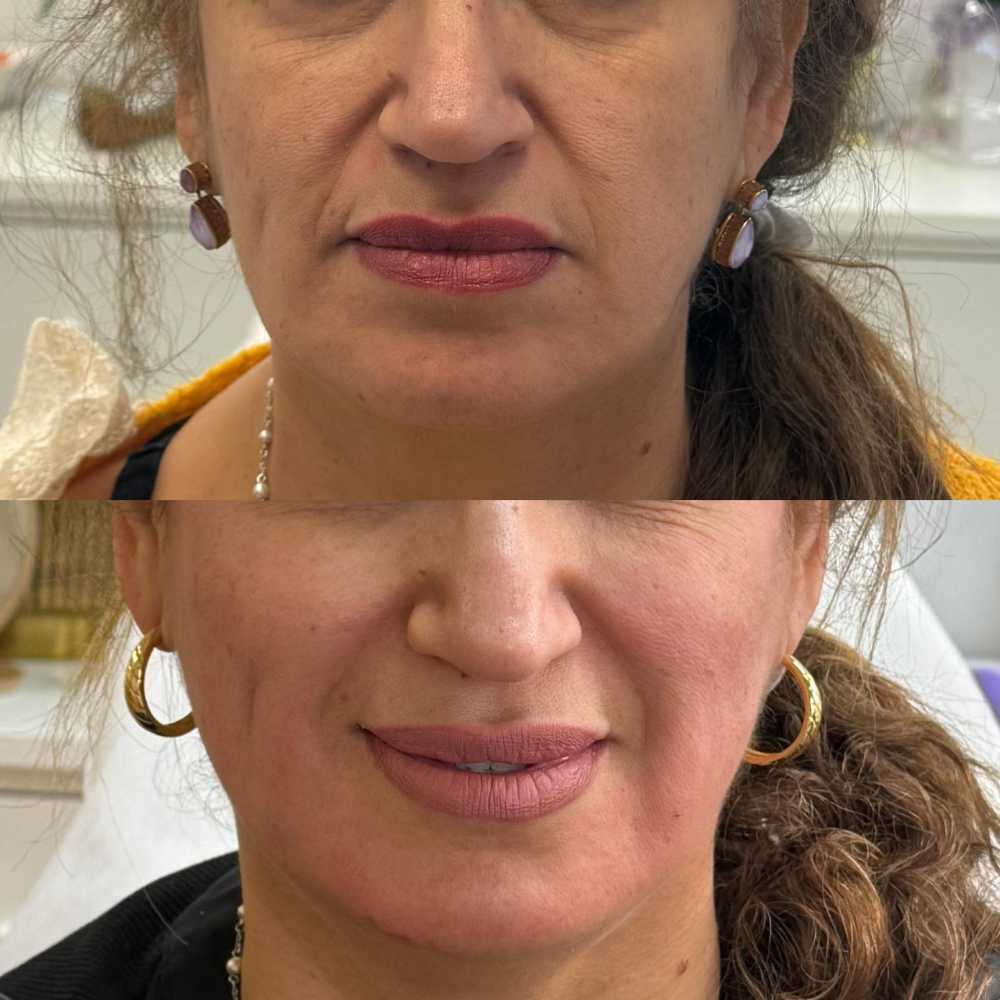
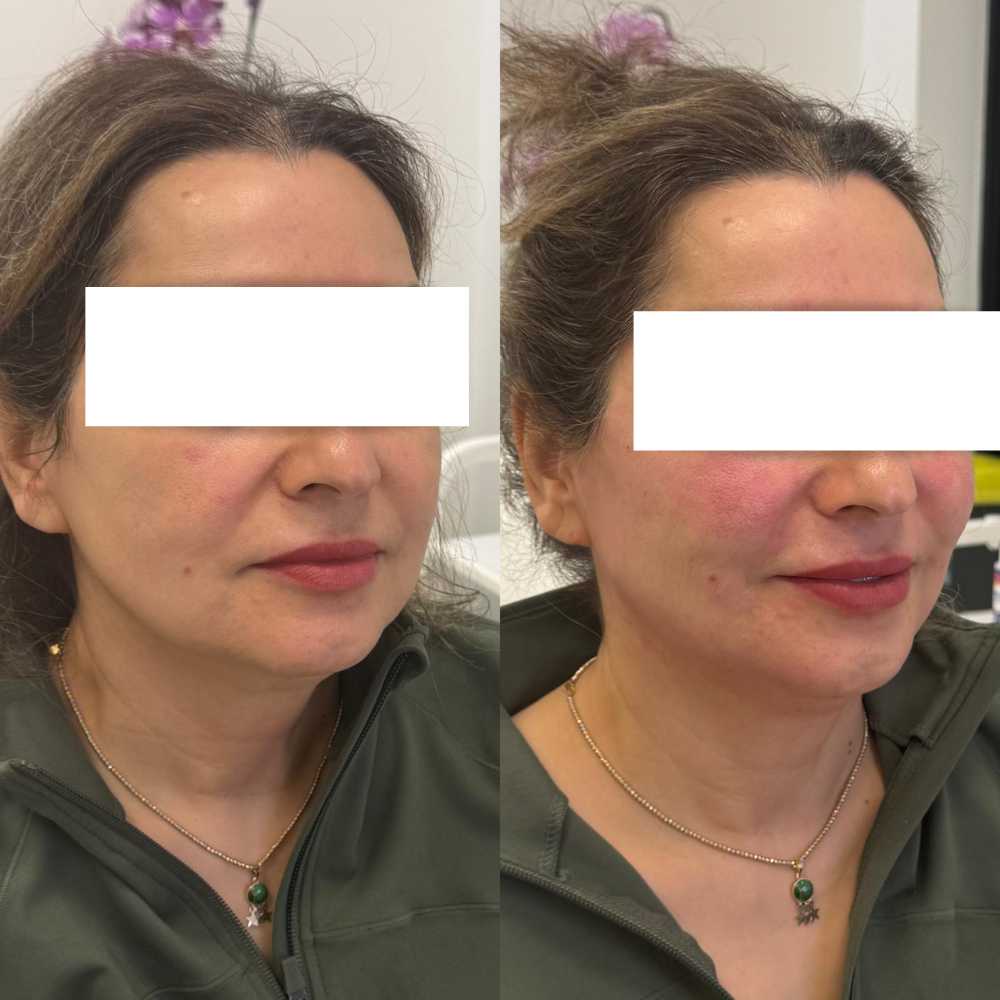
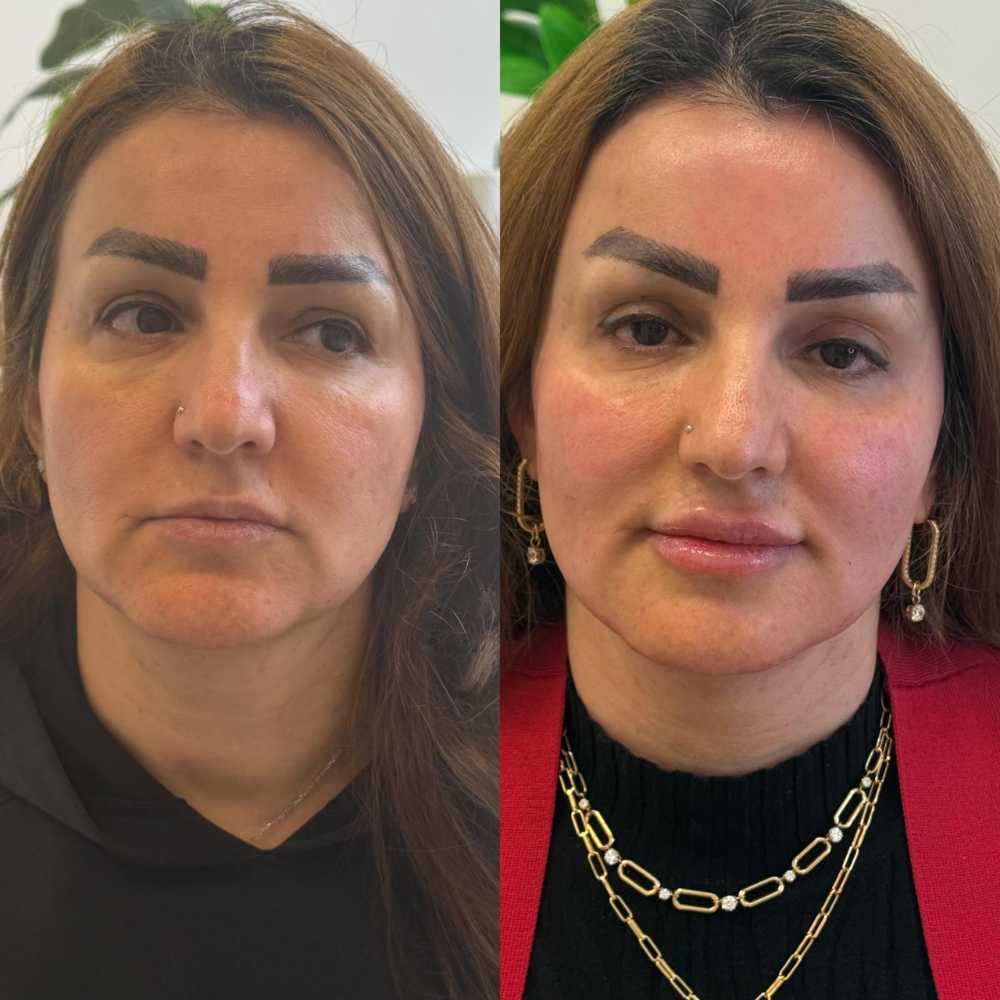
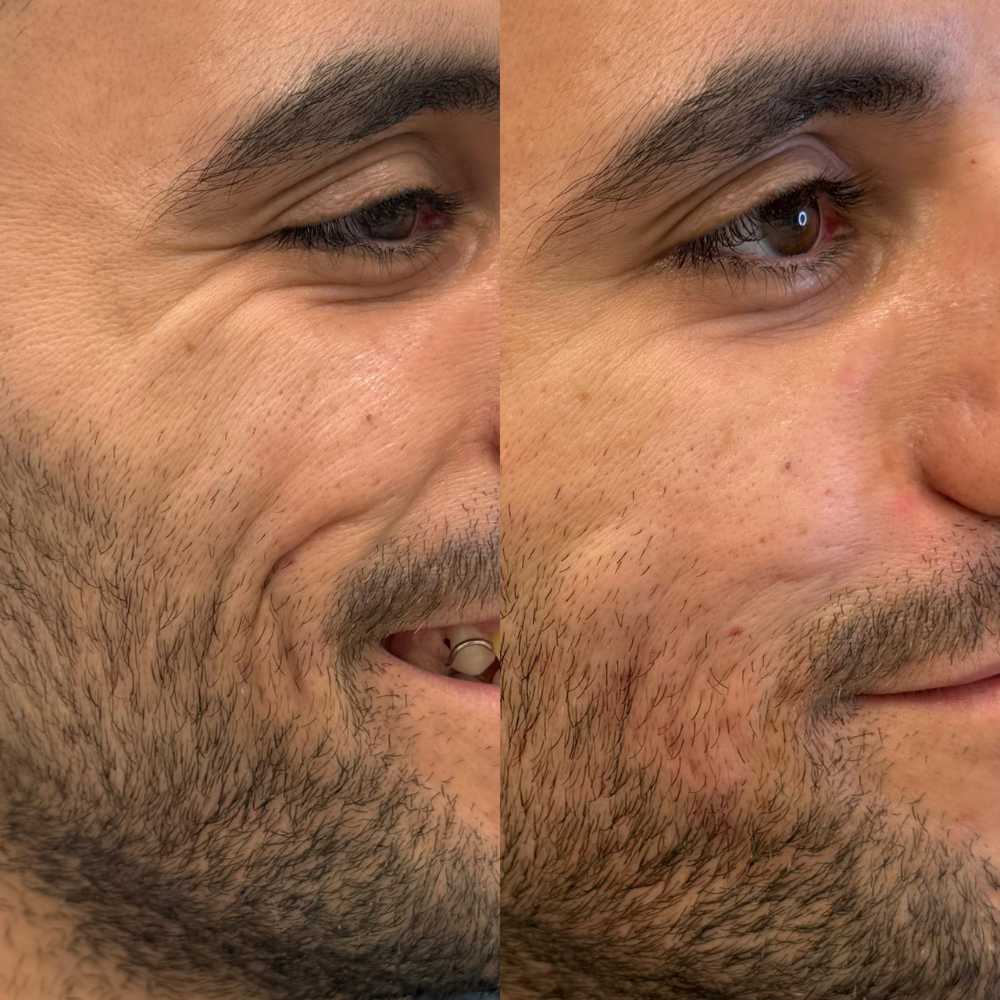
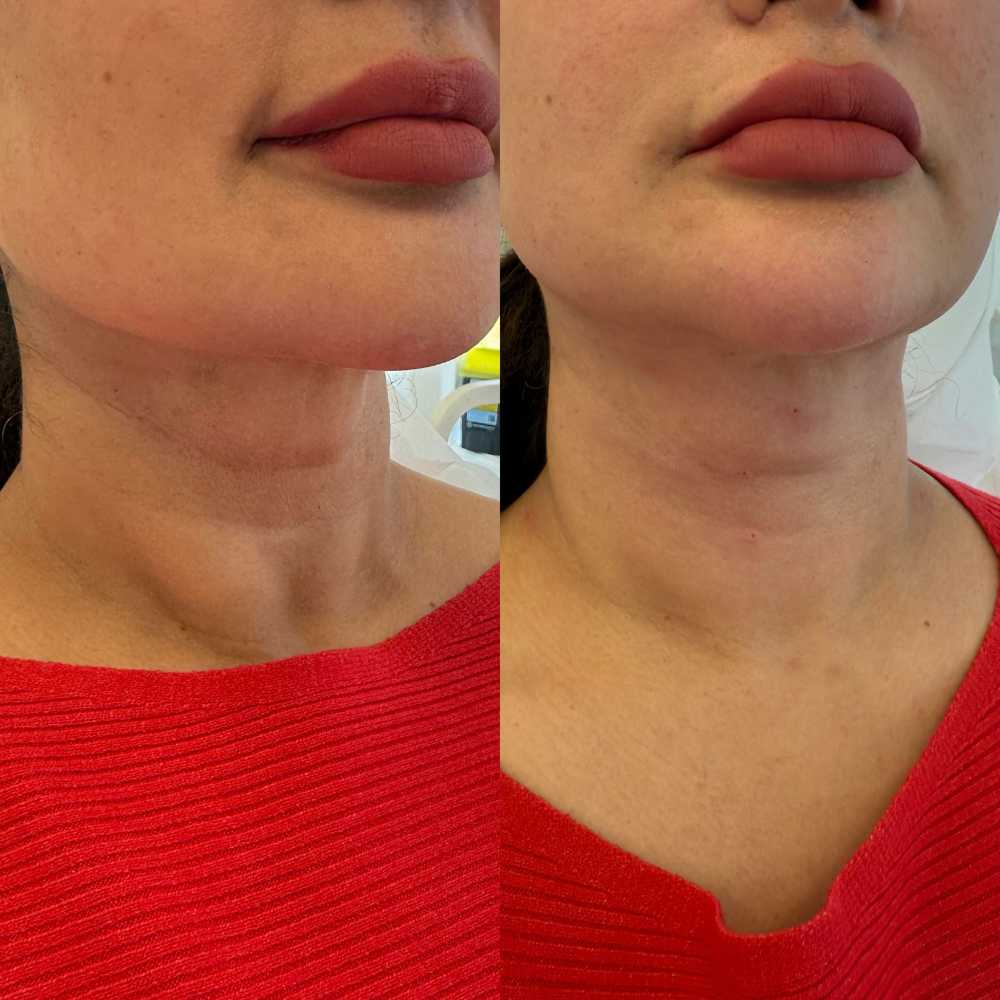
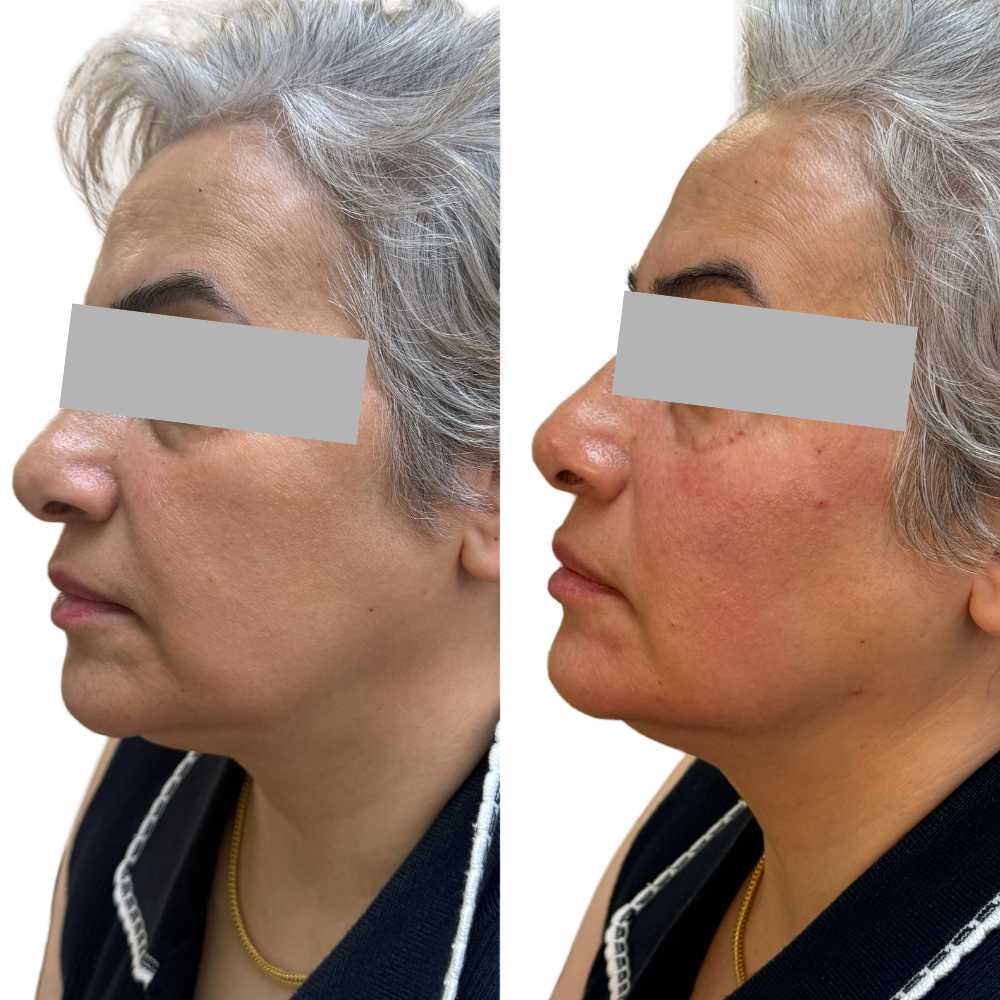
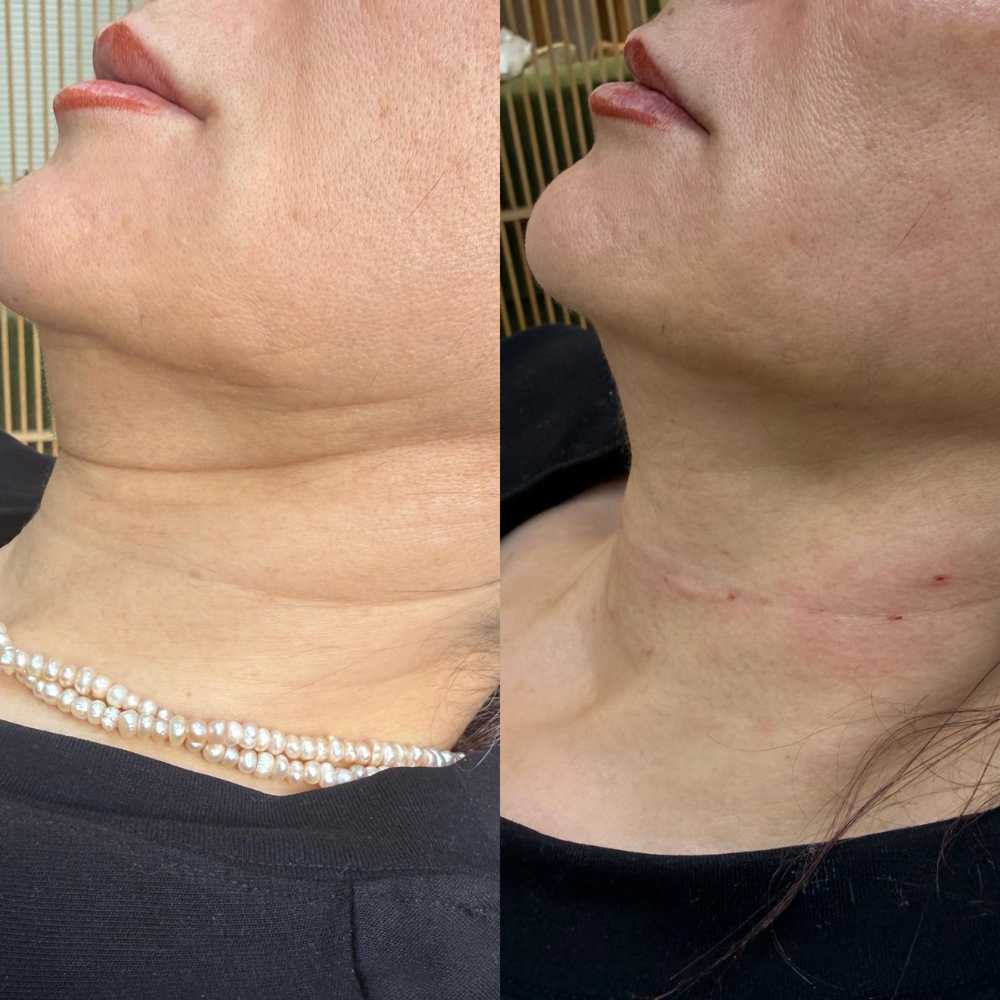
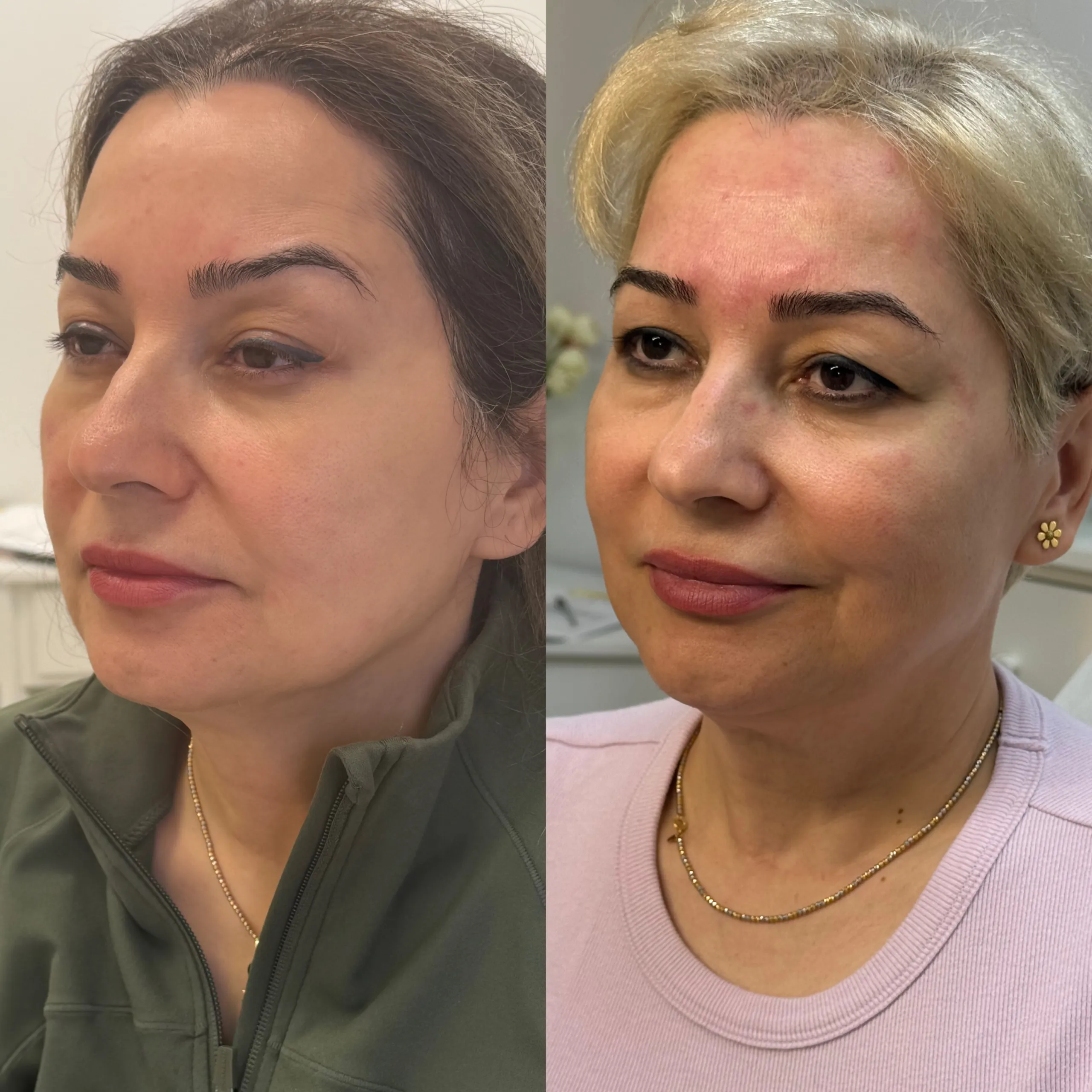
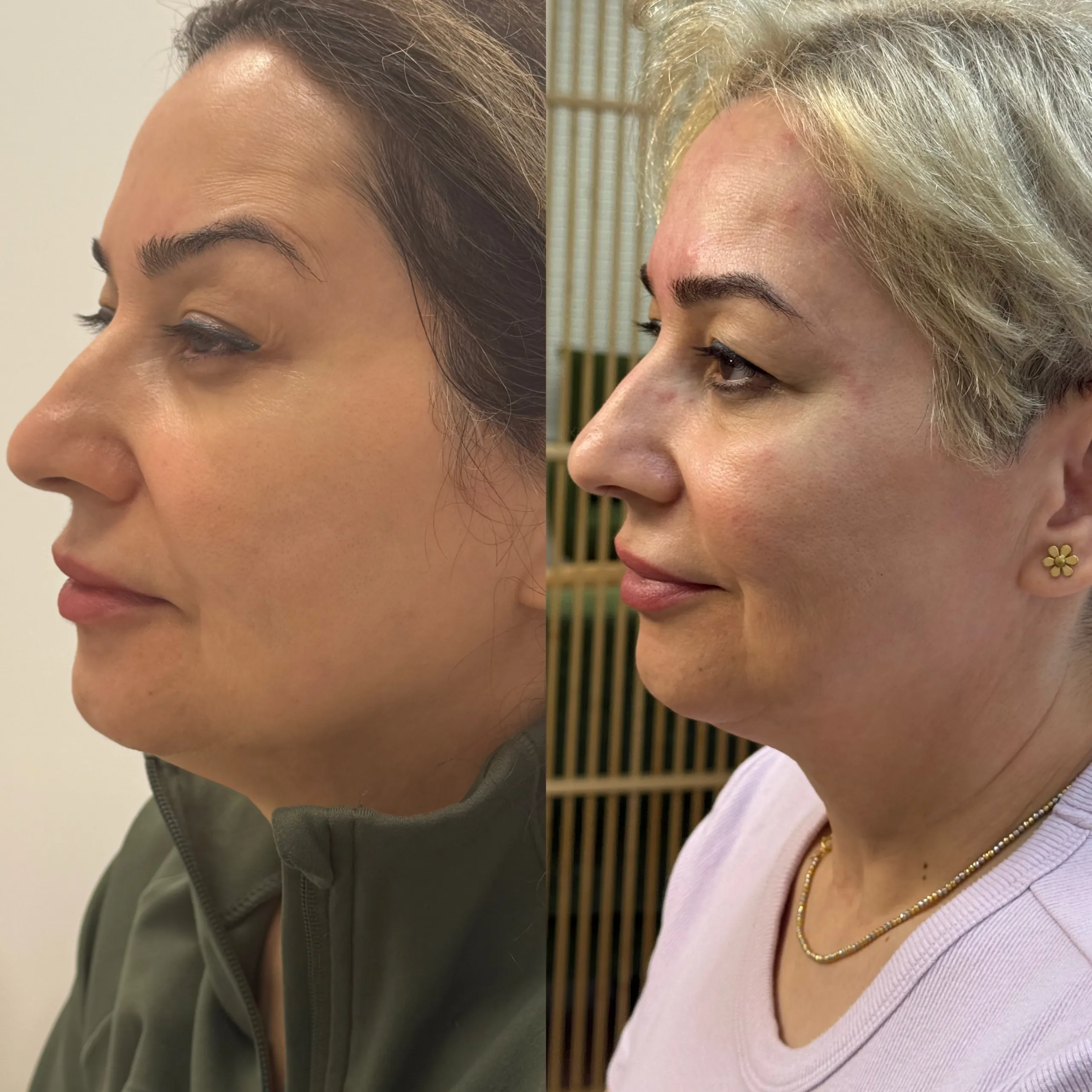
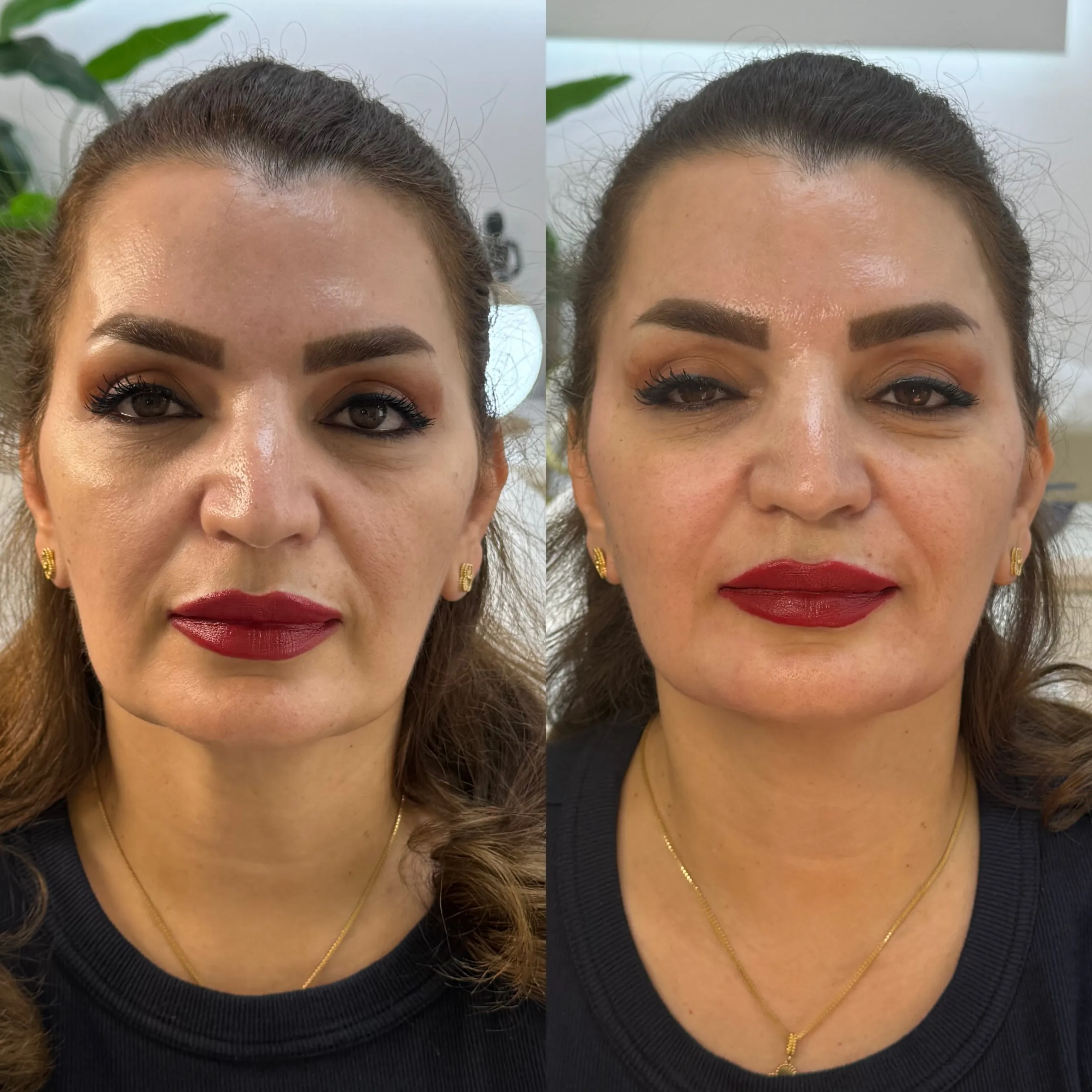
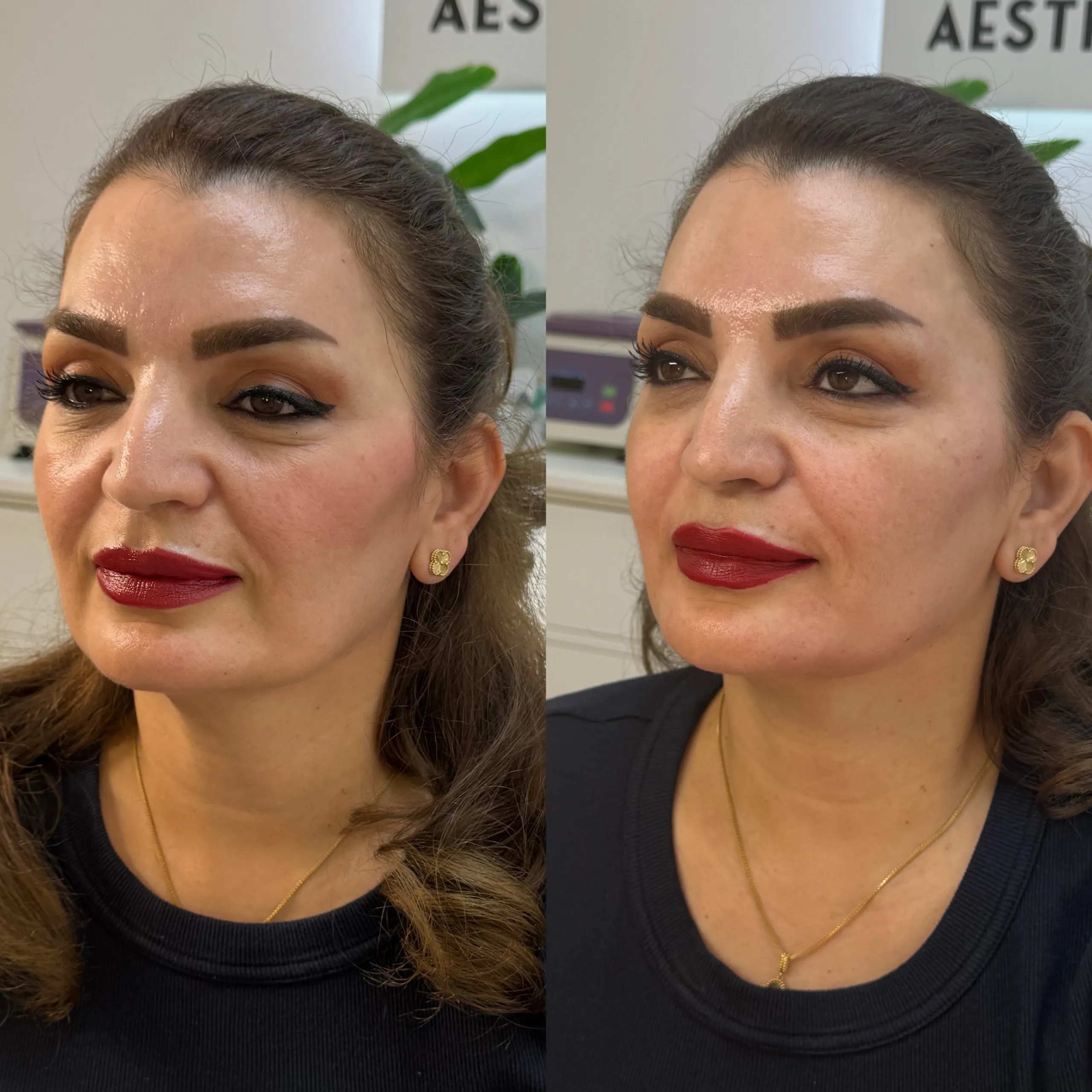
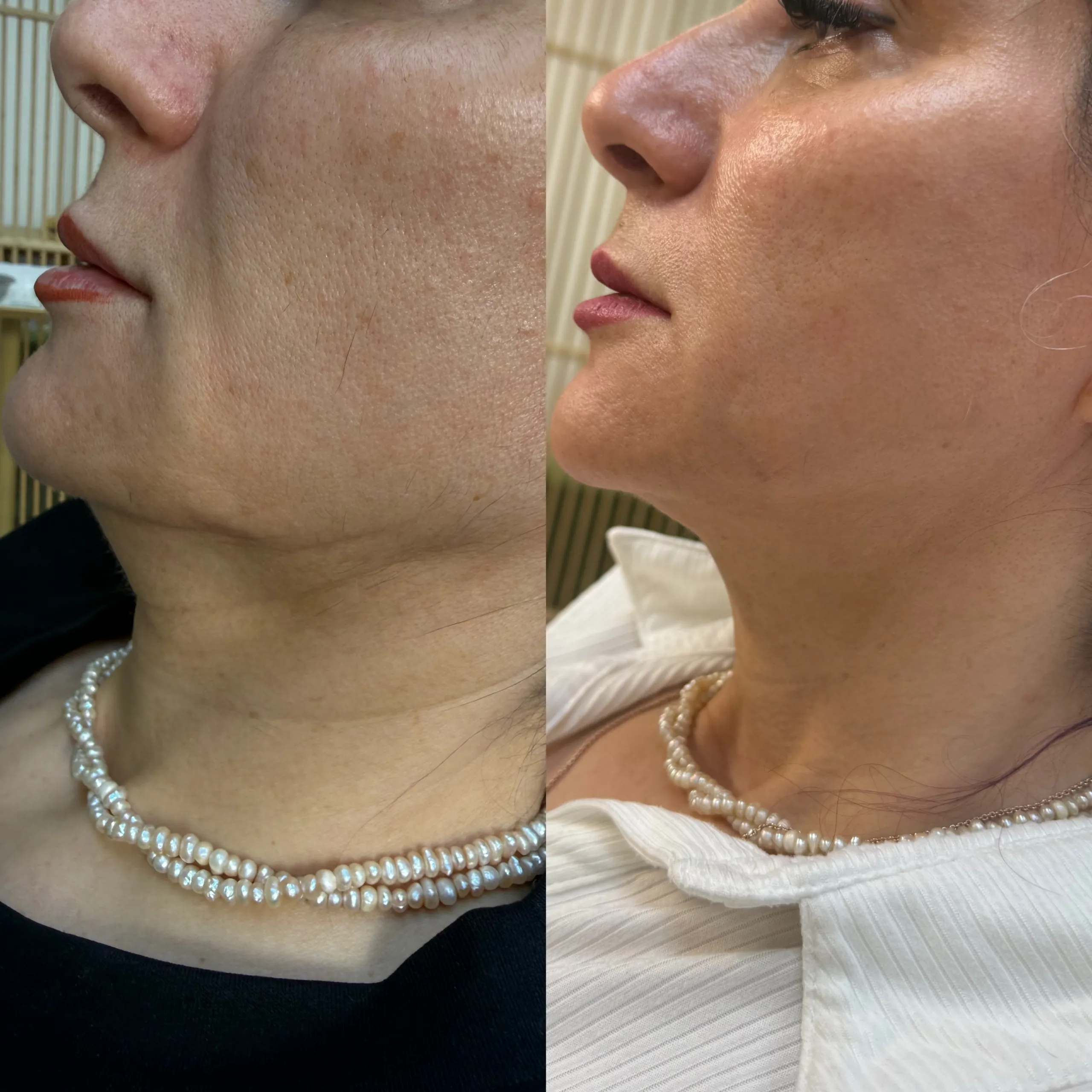
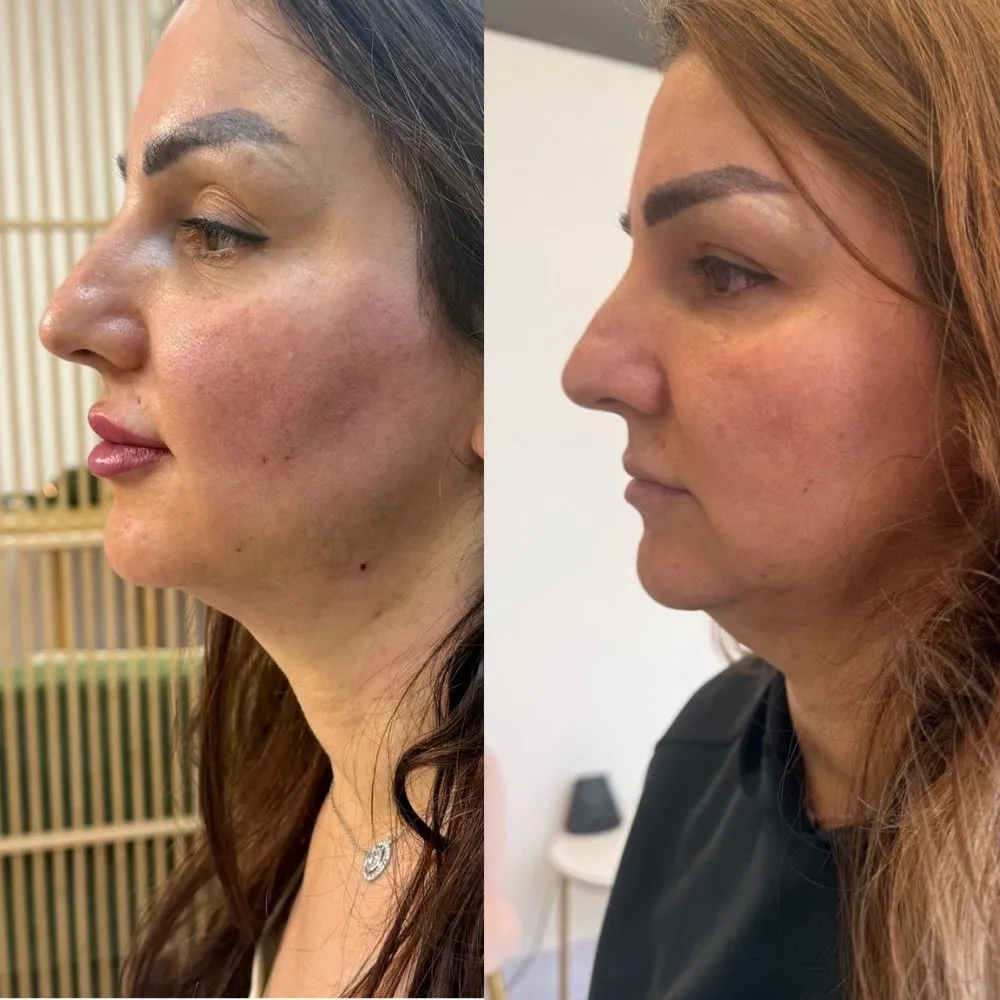
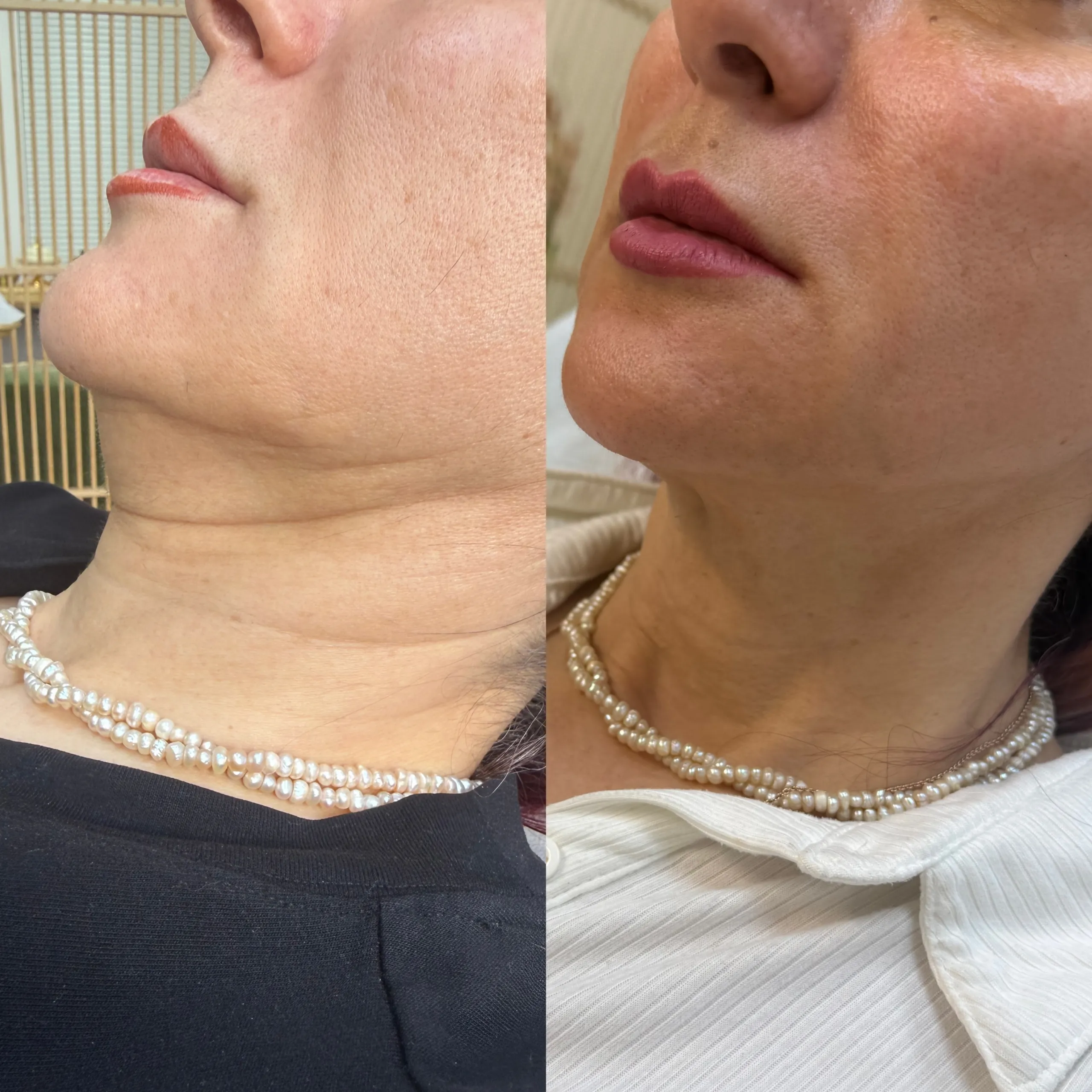
Real results, real confidence
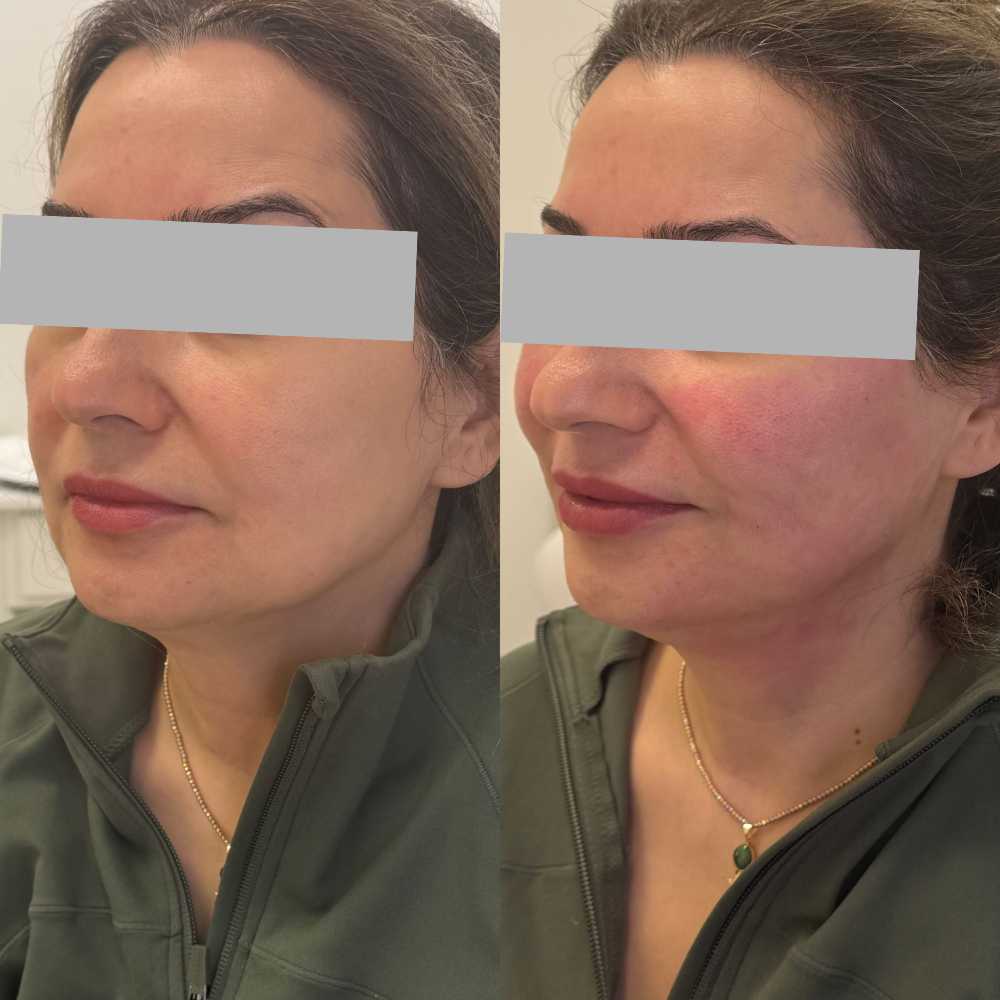
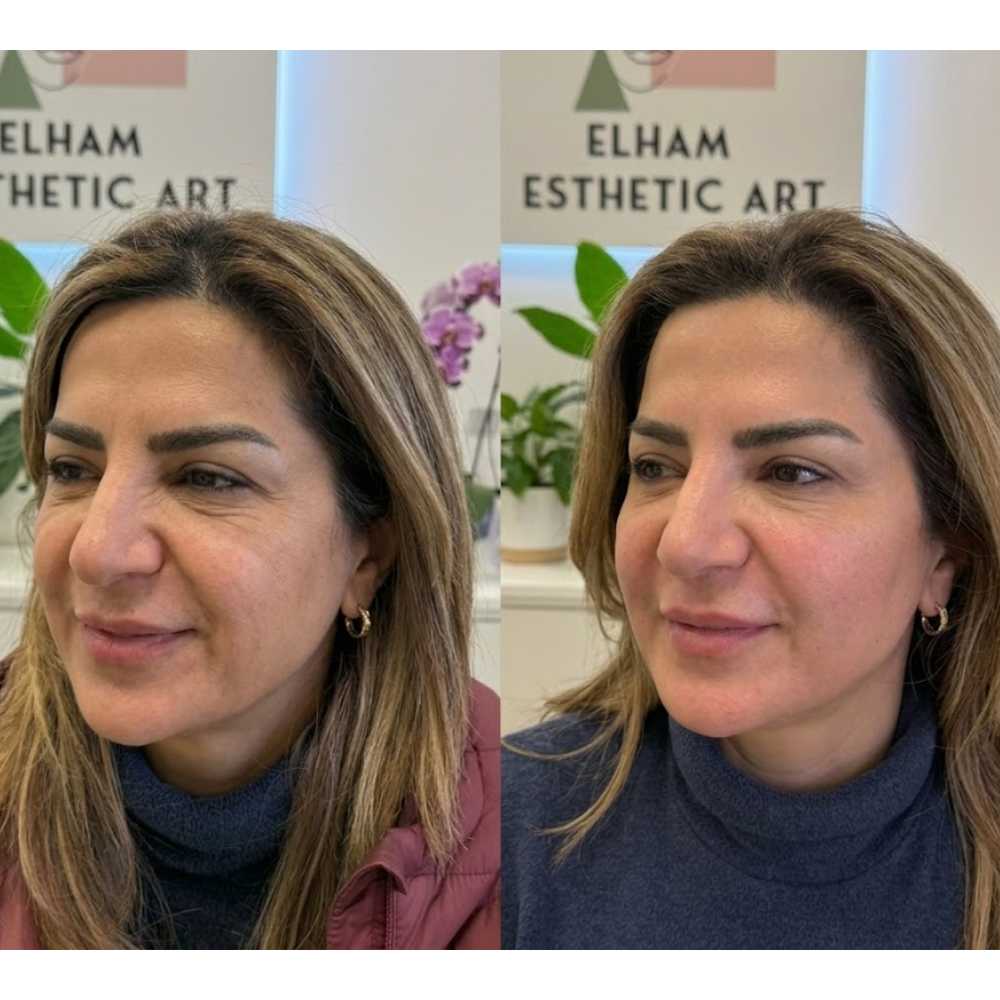
Every image below is a client of this clinic, photographed before and after treatment and published with consent. Results vary between individuals, and none of these images should be read as a promise of a particular outcome.
What Sculptra and Radiesse cost
Cost is confirmed at your consultation, because it depends on how much product your plan actually needs. We do not publish a headline price, and a quoted figure before an assessment would be a guess rather than an estimate.
What moves the number is straightforward: how many areas are being treated, how much volume has been lost, whether a course of Sculptra sessions is planned or a single Radiesse session per area, and whether biostimulators are being combined with another treatment. A face that has flattened over fifteen years needs more product than one that has softened over five, and that is the largest single variable.
Two things worth knowing before you compare quotes. Biostimulators are priced per vial or syringe rather than per visit, so a low session price with more sessions is not necessarily cheaper. And a Sculptra course is a course — the plan is set at the start, and a partially completed course does not deliver a partial version of the result, it delivers considerably less than that.
Why clients choose Elham Aesthetic Art
Biostimulators are among the more technique-dependent injectables in aesthetic medicine. The product has to be placed at the right depth, in the right plane, in the right quantity, and the result cannot be dissolved and restarted the way a hyaluronic acid filler can. Who injects it matters more here than almost anywhere else.
Every treatment at this clinic is assessed and performed by Elham Mousavi, an aesthetic medicine specialist with more than 26 years of clinical experience across Iran and Toronto. The consultation comes first, and it is a real assessment rather than a formality — if biostimulators are not the right answer for what you have described, you will be told so and offered the treatment that is.
Frequently asked questions
Medically reviewed by Elham Mousavi, Aesthetic Medicine Specialist (IMG), Elham Aesthetic Art, North York, Ontario. Last reviewed September 2026.
This page is general information about collagen-stimulating injectables and is not a substitute for an individual assessment. Product durations and treatment intervals are typical planning ranges, not guarantees. Sources: American Society of Plastic Surgeons, Types of Dermal Fillers; U.S. Food and Drug Administration, Dermal Fillers (Soft Tissue Fillers).
What Our Clients Say
Advanced aesthetic treatments for natural, rejuvenated results.
Elham Aesthetic Art is a Toronto-based aesthetic clinic specializing in advanced non-surgical facial rejuvenation, skin treatments, and body contouring services. We are dedicated to providing personalized care and natural-looking results in a professional and welcoming environment.
200 Finch Ave West, Unit 221, Toronto, ON
(416) 843-8744

Elham Aesthetic Art is a Toronto-based aesthetic clinic specializing in advanced non-surgical facial rejuvenation, skin treatments, and body contouring services. We are dedicated to providing personalized care and natural-looking results in a professional and welcoming environment.
200 Finch Ave West, Unit 221, Toronto, ON
(416) 843-8744