
PRF / PRP
Natural regeneration treatment restoring skin glow and stimulating hair growth

PRF / PRP
Natural regeneration treatment restoring skin glow and stimulating hair growth
PRP treatment in Toronto uses a small sample of your own blood to stimulate collagen, improve skin quality and support hair growth. Elham Aesthetic Art provides PRP and PRF at our clinic on Finch Avenue West in North York, for clients across Toronto, Vaughan, Thornhill and Richmond Hill. Because the material is drawn from you and returned to you, there is no filler, no synthetic product and no risk of allergy to a foreign substance — which is why PRP suits people who want a gradual, natural change rather than an immediate one.
What PRP and PRF are, and how they differ
Both treatments start the same way. A small volume of blood is drawn from your arm, exactly as it would be for a routine blood test, and placed in a centrifuge that separates it into layers. The layer that concentrates your platelets is the one we use, because platelets carry the growth factors your body already relies on to repair tissue. Concentrating them and placing them where repair is wanted is the whole principle of the treatment.
The difference between PRP and PRF is how the blood is spun and what is added to it. PRP (platelet-rich plasma) is spun quickly, with an anticoagulant, which produces a liquid concentrate that can be injected precisely or spread across the skin during microneedling. PRF (platelet-rich fibrin) is spun more slowly and without any anticoagulant, so the blood is allowed to begin clotting naturally. The result is a soft fibrin scaffold that holds the platelets and white cells in place and releases growth factors gradually over several days rather than all at once.
Neither is simply better than the other. PRP is more fluid and easier to distribute over a wide area; PRF is thicker, stays where it is placed, and is often preferred for delicate work such as the under-eye area. Which one is used is a clinical decision made at your consultation, and a single treatment plan may use both.
| PRP — platelet-rich plasma | PRF — platelet-rich fibrin | |
|---|---|---|
| How it is prepared | Spun at higher speed with an anticoagulant | Spun at lower speed, no anticoagulant |
| Consistency | Liquid concentrate | Soft fibrin gel or matrix |
| Growth factor release | Released quickly after placement | Released gradually over several days |
| Also contains | Platelets and plasma | Platelets, plasma, white cells and fibrin |
| Most often used for | Scalp and hair restoration, microneedling with PRP, larger areas such as neck and decolletage | Under-eye hollows, fine or delicate areas, clients who prefer no additives |
| Typical course | 3 to 4 sessions, 4 to 6 weeks apart | 3 to 4 sessions, 4 to 6 weeks apart |
PRP for skin rejuvenation in Toronto and North York
Used on the face, PRP works on skin quality rather than on shape. It does not add volume and it will not lift sagging tissue — what it does is prompt the skin to rebuild collagen, which over a few months tends to show as better texture, a more even tone and a general return of the light-reflecting quality that tired skin loses.
It is most often combined with microneedling. The needling creates controlled micro-channels, and the PRP is applied into them so the growth factors reach the layer of skin where remodelling happens. That combination is a common reason clients in Toronto search for PRP in the first place, and it suits people whose main concerns are dullness, rough texture, enlarged pores, or the shallow lines that appear before deeper volume loss sets in.
Results build slowly. There is usually nothing dramatic to see in the first fortnight, a visible change by around six to eight weeks, and the fullest effect once a course is finished.

PRP for hair restoration
PRP injected into the scalp is used for thinning hair, most commonly the gradual, patterned thinning that affects both men and women — the Canadian Dermatology Association sets out the recognised patterns and their variants. It works on follicles that are still alive but have become miniaturised — producing finer, shorter, weaker hairs than they once did. Growth factors placed around those follicles are intended to extend the active growing phase and improve the calibre of the hair that is already being produced.
That distinction matters more than anything else on this page, so it is worth stating plainly: PRP can improve hair that is thinning, but it cannot regrow hair from a follicle that has already died. Scalp that has been completely smooth for years will not respond. This is why the assessment comes first, and why we would rather tell you at consultation that you are unlikely to benefit than sell you a course that cannot work.
Where it does suit, the pattern is usually a reduction in shedding first, noticeable within the first couple of months, followed by gradual thickening across the treated area. Hair grows slowly, so a fair assessment of whether treatment has worked is made at around six months rather than six weeks. Most people who respond well continue with maintenance sessions once or twice a year to hold the result.
Clients researching this treatment often want the detail before they book. Two guides on this site go further than a service page reasonably can: PRP for thinning hair — results and timeline, and what PRP hair treatment costs in Canada.
PRF under the eyes
The under-eye area is where PRF is usually chosen over PRP. The skin there is thinner than anywhere else on the face, the tissue is unforgiving of anything placed badly, and the slower, steadier release from a fibrin matrix is better suited to it than a liquid concentrate.
Under-eye darkness is not one condition, and the three usual causes do not all respond to PRF. Establishing which one you have is what decides whether this treatment is the right answer, so that assessment comes first. Our PRF under eyes page for Toronto and North York sets out the three causes, how to tell them apart, and exactly where PRF helps and where it does not.
Expect some puffiness for a day or two afterwards, and accept that bruising in this area is common and nothing to be alarmed by. Most people plan the appointment so that they are not at an event within the following week.

PRP and PRF hand rejuvenation
Hands age visibly and are rarely treated. As the skin thins and the fat pad between the tendons recedes, veins and tendons become more prominent and the skin itself loses its texture. PRP and PRF are used here to improve skin quality — thickness, texture and tone — rather than to fill the hollows between the tendons, which is a separate treatment with a different product.
Hands are also the area where sun protection makes the largest difference to how long a result lasts, and that is worth planning for before treatment rather than after.
PRP Toronto and North York: what a course of treatment involves
An appointment takes around an hour from arrival to leaving, and most of that is preparation rather than treatment. The blood draw takes a minute or two. The centrifuge runs for roughly ten to fifteen minutes. Numbing cream is applied while it spins, so by the time the plasma is ready the area is comfortable. The placement itself — whether that is injection or microneedling — is usually the shortest part of the visit.
PRP is not a single-session treatment, and any clinic promising a transformation from one appointment is describing something other than what this is. A standard course is three to four sessions spaced four to six weeks apart, which is the interval at which the previous session’s collagen response is still building when the next is added. Maintenance afterwards is typically one session every six to twelve months, depending on the area and on what you are treating.
| Area treated | Usual course | First visible change | Maintenance |
|---|---|---|---|
| Face — skin quality | 3 to 4 sessions, 4 to 6 weeks apart | 6 to 8 weeks | Every 6 to 12 months |
| Scalp — thinning hair | 3 to 4 sessions, 4 to 6 weeks apart | Reduced shedding by 8 to 12 weeks; density assessed at 6 months | Every 6 to 12 months |
| Under-eye — PRF | 2 to 3 sessions, 4 to 6 weeks apart | 4 to 8 weeks | Every 9 to 12 months |
| Hands, neck and decolletage | 3 sessions, 4 to 6 weeks apart | 8 to 12 weeks | Every 12 months |
Timelines are typical ranges, not guarantees. How quickly you respond depends on your age, your general health, the condition being treated and how consistently you complete the course.
Who PRP and PRF suit — and who they do not
A good fit if you
Treatment is deferred or declined if you
This list is a guide, not a screening tool. Your full medical history, medications and supplements are reviewed at consultation before anything is agreed.
Before your appointment
Drink water through the day beforehand — a well-hydrated blood draw is a faster and more comfortable one. Avoid alcohol for about 24 hours, and tell us about any blood-thinning medication or supplement, including aspirin, fish oil, vitamin E and high-dose turmeric, because several of these affect bruising and some affect whether treatment should go ahead at all. Eat normally before you come; this is not a fasting appointment.
After your appointment
Expect redness and mild swelling for a day or two, and some bruising at injection points, particularly under the eyes. Leave the skin alone for the rest of the day: no make-up over treated skin, no active skincare such as retinoids or acids for roughly 48 hours, and no heat — sauna, steam, hot yoga or intense exercise — for the same period. After scalp treatment, wait until the following day to wash your hair. Sun protection matters from the first day, not the first week.
Real results, real confidence
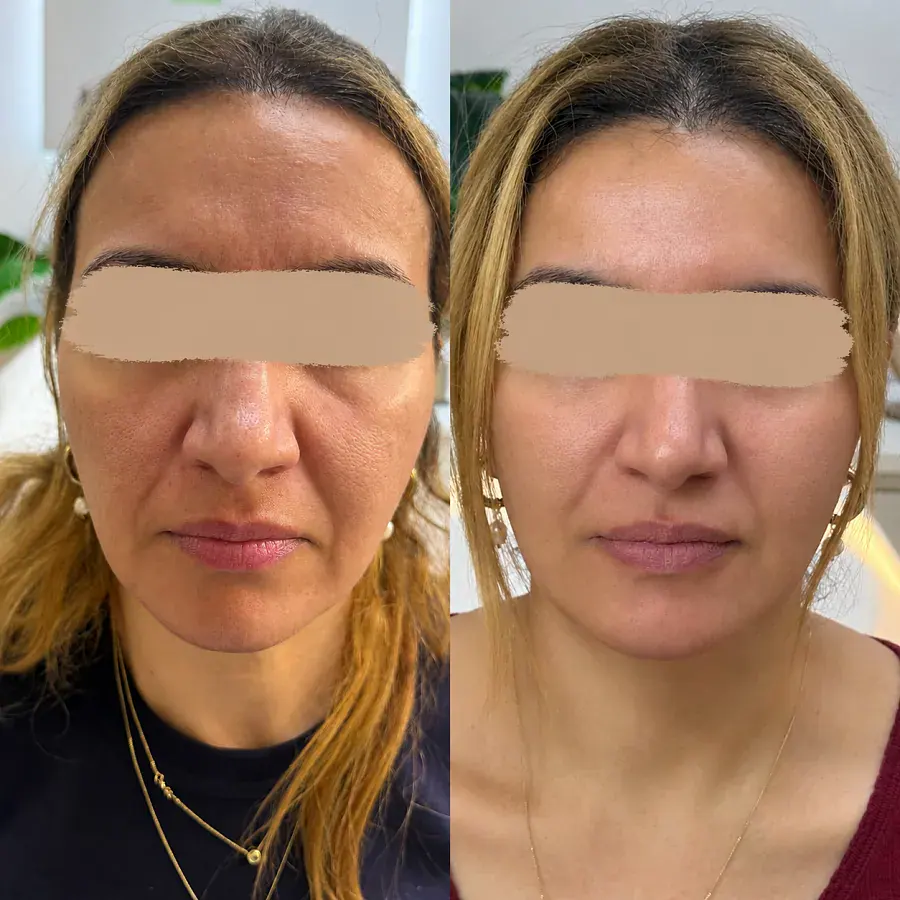
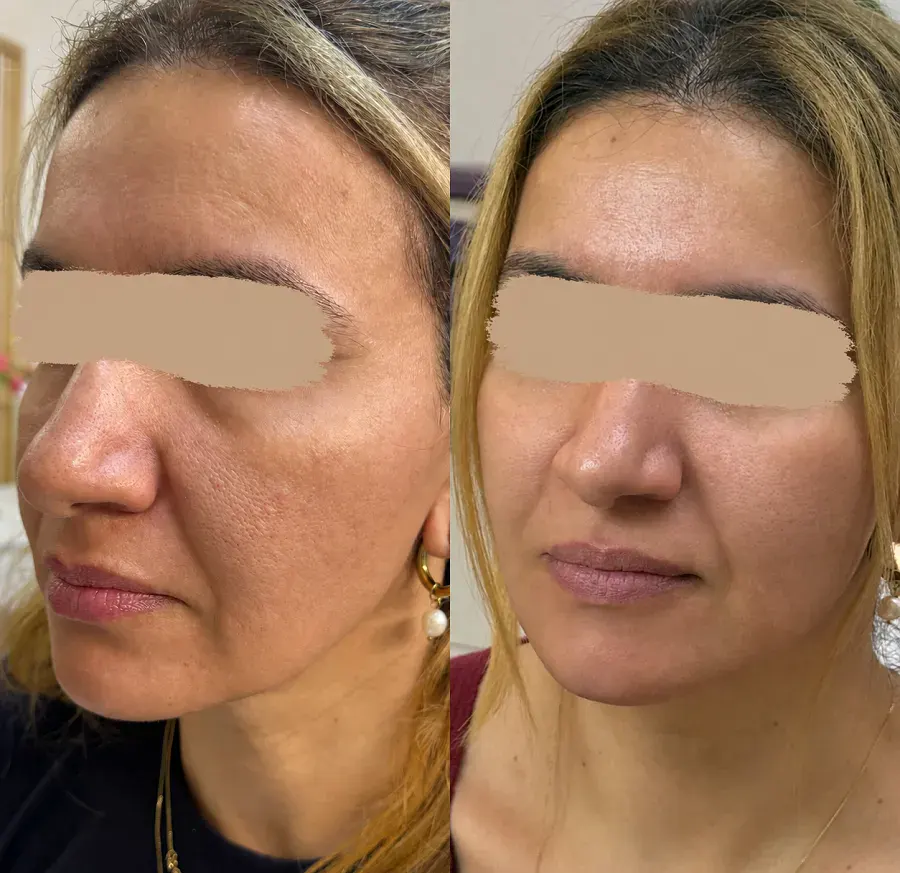
Every image below is a client of this clinic, photographed before and after treatment and published with consent. Results vary between individuals, and the images are shown to illustrate the kind of change this treatment produces rather than to promise a particular outcome.



What PRP and PRF cost
Cost is confirmed at your consultation, because it depends on the area being treated and on how many sessions your plan actually needs. We do not publish a headline price for a treatment that is quoted per course, since a single-session figure tells you very little about what a full course will come to.
What we will tell you at consultation is the total for the recommended course, not a per-session number that grows later. New clients receive 10% off their first appointment.
Why clients choose Elham Aesthetic Art
Frequently asked questions
Skin improvements can appear within weeks, while hair results develop gradually over a few months.
Minimal downtime. You may experience slight redness or swelling for 24–48 hours.
Typically 3 sessions spaced a few weeks apart for optimal results.
Yes, since it uses your own blood, the risk of allergic reaction is extremely low.
Medically reviewed by Elham Mousavi, Aesthetic Medicine Specialist (IMG), Elham Aesthetic Art, 200 Finch Ave W, Unit 221, North York, Ontario. Last reviewed 18 September 2026. This page is general information about PRP and PRF treatment and is not a substitute for an individual medical assessment. Call +1 416-843-8744 to arrange a consultation.
What Our Clients Say
Advanced aesthetic treatments for natural, rejuvenated results.
Elham Aesthetic Art is a Toronto-based aesthetic clinic specializing in advanced non-surgical facial rejuvenation, skin treatments, and body contouring services. We are dedicated to providing personalized care and natural-looking results in a professional and welcoming environment.
 200 Finch Ave West, Unit 221, Toronto, ON
 (416) 843-8744
Elham Aesthetic Art is a Toronto-based aesthetic clinic specializing in advanced non-surgical facial rejuvenation, skin treatments, and body contouring services. We are dedicated to providing personalized care and natural-looking results in a professional and welcoming environment.
200 Finch Ave West, Unit 221, Toronto, ON
(416) 843-8744