


Elham Aesthetic art
Medically reviewed by Elham Mousavi, Aesthetic Medicine Specialist (IMG) — 26+ years in aesthetic medicine.
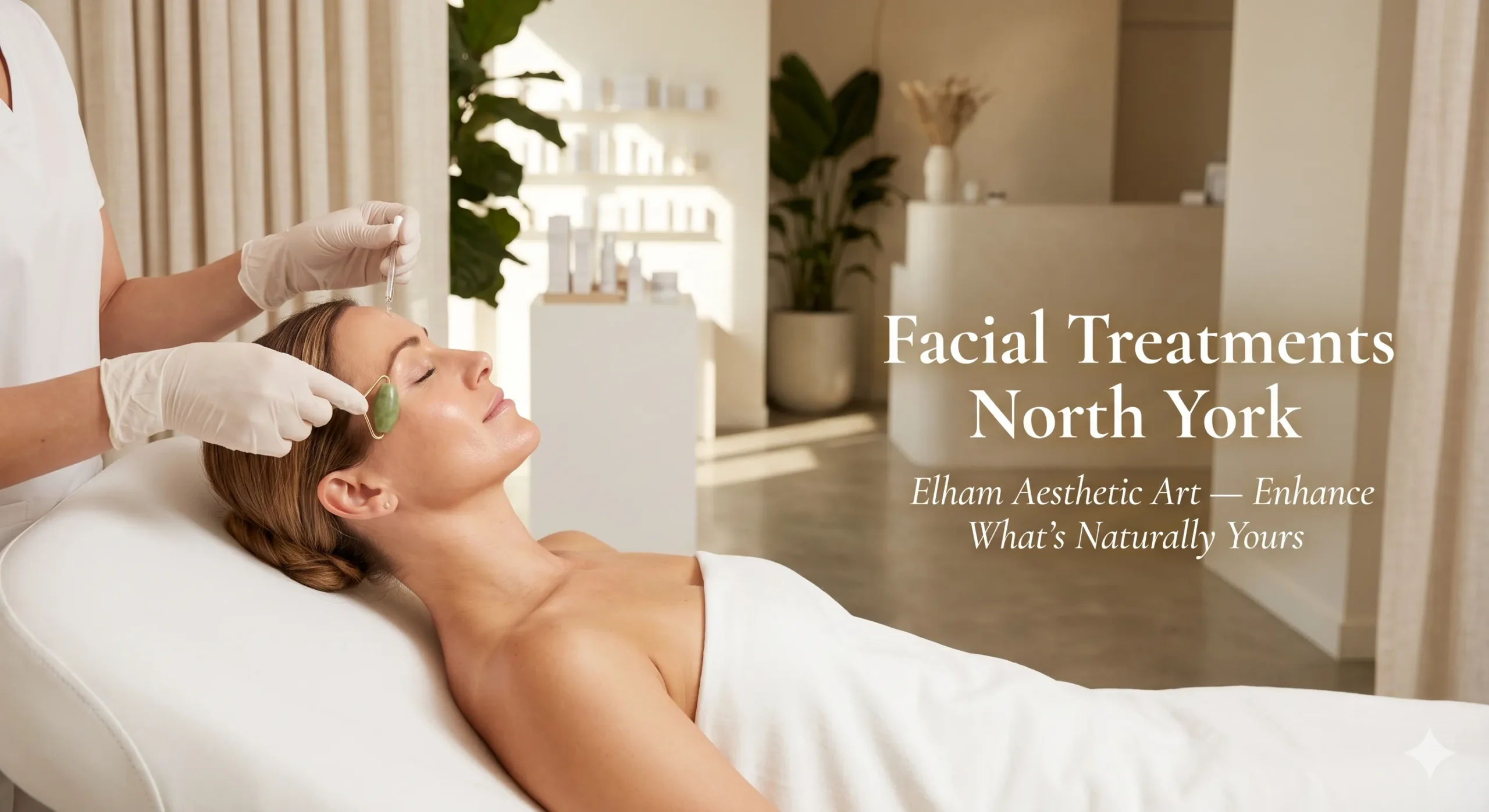
If you have ever looked at a clinic menu and wondered why the same treatment appears under four different names, you are not misreading it. Most of the confusion around types of facials comes from menus that mix technique names — deep-cleansing, hydrating, chemical exfoliation — with brand names for machines, as though the two were the same kind of thing. They are not, and knowing the difference is what stops you booking the wrong treatment twice.
This guide sets out the main types of facials, what each one actually does to the skin, who each suits, and — just as usefully — when a facial is not the treatment that will solve your problem. It is written for someone deciding what to book, not for someone who has already decided.
The main types of facials, and what each one is actually for
Almost every facial on almost every menu is a variation on six things. The names change between clinics; the underlying techniques do not.
| Type of facial | What it actually does | Best suited to | Downtime |
|---|---|---|---|
| Deep-cleansing (classic) facial | Cleanse, soften, exfoliate, extract, mask | Congestion, blackheads, general upkeep | None |
| Hydrating facial | Adds water and lipids to the skin barrier, with little or no exfoliation | Dry, tight or dehydrated skin; skin recovering from another treatment | None |
| Hydrodermabrasion (water-based resurfacing) | Exfoliates in liquid while drawing out the contents of congested pores at the same time | Dullness, rough texture, congestion, and skin that reacts badly to dry scrubs | None |
| Chemical exfoliation (peel) facial | An acid or enzyme loosens the bonds holding dead surface cells in place | Uneven tone, dullness, some surface pigmentation | None to a few days of light flaking, depending on strength |
| Acne or extraction-focused facial | Softens and clears blocked pores and calms surface inflammation | Blackheads and comedonal acne, assessed first | Mild redness for a few hours |
| LED-assisted facial | Adds a light-therapy step to the end of a facial, usually to calm the skin | Redness-prone skin and post-treatment calming | None |
One thing worth saying plainly, because menus rarely do: microneedling, radiofrequency and injectables are not facials. They are separate clinical procedures with their own consent, aftercare and risk profile. They are often planned alongside a facial, and a good clinic will tell you which of the two your concern actually calls for.
Deep-cleansing facials
The oldest format, and still the most common: cleanse, soften the skin, exfoliate, extract what needs extracting, finish with a mask. It is the type of facial most people picture when they hear the word, and for congestion and general upkeep it does the job well. What it does not do is change the structure of the skin — it clears the surface and leaves it looking brighter for a week or two.
Hydrating facials
A hydrating facial goes the other way: minimal exfoliation, maximum barrier support. It suits skin that feels tight, looks flat, or has been over-exfoliated at home — which, in practice, describes a great deal of the skin we see. If your skin stings when you apply almost anything, this is usually the type of facial to start with, not a peel.
Hydrodermabrasion — the water-based option
Hydrodermabrasion combines the two ideas. A handpiece delivers a controlled stream of solution while simultaneously drawing away dead surface cells and pore contents. Because the exfoliation happens in liquid rather than by abrasion, it tends to suit reactive skin better than a mechanical scrub, and there is normally no downtime. It is a sensible first treatment when the complaints are dullness, rough texture, blackheads, or makeup that never quite sits right.
Chemical exfoliation and peel facials
Peels work chemically rather than physically. Enzyme and light acid formulas suit beginners and sensitive skin; stronger acids go deeper and ask more of your aftercare in return. The trade-off is straightforward — the more surface you remove, the more sun protection and patience the following week requires. Freshly exfoliated skin is measurably more sun-sensitive, which is why every dermatology body, including the American Academy of Dermatology, puts daily broad-spectrum sunscreen at the centre of any resurfacing plan.
Acne and extraction-focused facials
Extraction facials clear what is physically blocking the pore. They work well on blackheads and closed comedones. They are the wrong choice for inflamed, pustular or cystic acne, where pressure and exfoliation on already-inflamed skin can worsen it and raise the risk of marking. That distinction needs to be made by someone looking at your skin, not by you choosing from a menu.
LED-assisted facials
LED is a finishing step rather than a treatment category of its own. Added to the end of a facial it is comfortable, carries essentially no risk, and is most useful for calming redness-prone skin. Treat it as a helpful extra, not as the reason to book.
Brand names are not types of facials
This is where most people get stuck. HydraFacial® and DiamondGlow® are trademarked machines, not treatment categories. The technique underneath the first is hydrodermabrasion; the second is a variation on the same idea of exfoliating and infusing in one pass. “Oxygen facial”, “Korean facial” and most seasonal names on a menu are marketing labels layered on top of the six techniques above.
This matters for two practical reasons. First, comparing clinics on brand names tells you very little about what will actually be done to your skin. Second, a brand name on a menu is a claim about equipment, and equipment claims should be accurate.
So, for the avoidance of doubt about our own clinic: Elham Aesthetic Art uses a hydrodermabrasion device. We do not operate the branded HydraFacial® system or a DiamondGlow® unit, and we do not describe our treatment by either name. The technique belongs to the same family of water-based resurfacing; the trademarked machines are different products. If you have had one of them elsewhere and liked the result, say so at your consultation and we will be straightforward about what our device does and does not replicate.
How to choose the type of facial for your skin
The useful question is not “which facial is best” but “what is my skin actually doing, and which technique addresses that”. Here is how the common complaints usually map.
- Dull, tired-looking skin. Usually a build-up of dead surface cells plus dehydration. Hydrodermabrasion or a light exfoliating facial, then reassess.
- Congestion and blackheads. A short course of extraction-focused or hydrodermabrasion facials, spaced closer together at first, alongside an honest review of what you are putting on your skin at home.
- Dry, tight, flaky skin. A hydrating facial. Resist the urge to exfoliate your way out of dryness — it is the most common self-inflicted skin problem we see.
- Sensitive or redness-prone skin. Gentle enzyme exfoliation or a hydrating facial, LED optional. Leave strong acids and heavy extraction until the barrier is behaving.
- Uneven tone and surface pigmentation. Chemical exfoliation can help the surface layer, but pigmentation that sits deeper — melasma in particular — needs a proper plan, not a facial series.
- Rough or uneven texture that does not shift. A facial will improve how it looks; microneedling is the treatment that changes it, by stimulating new collagen. Published research on microneedling and collagen induction is the reason it is a separate procedure rather than a facial add-on.
- Acne scarring. No type of facial resolves scarring. It needs assessment and a dedicated plan — see acne scar treatment.
- Loss of glow with no single obvious cause. A facial on a maintenance interval, sometimes with a hydration-focused treatment such as skin boosters or mesotherapy alongside it.
If you would rather have your skin assessed than work through that list yourself, that is what a consultation is for — our medical facials in North York are chosen after an assessment rather than picked off a fixed menu.
What no type of facial can do
Being clear about the ceiling saves money and disappointment:
- One session does not change your skin. It changes how your skin looks for one to two weeks. Measurable change comes from a course, spaced sensibly.
- Facials do not treat scarring, deep lines or laxity. Those need collagen-stimulating or structural treatments, planned separately.
- Facials do not replace your home routine. Four weeks of the wrong products will undo an hour of good work.
- More frequent is not better. Over-exfoliated skin becomes sensitised, red and paradoxically dull. If your skin is reacting, lengthen the interval instead of adding treatments.
How often should you have a facial?
For most skin, every four to six weeks is the interval that makes sense — roughly the skin’s own renewal cycle, so each session works on newly surfaced skin rather than repeating work already done. Congestion-focused courses sometimes start every two to three weeks for the first few sessions, then settle into maintenance. Skin that is dry or reactive often does better on a longer gap, not a shorter one.
Sequencing matters too. If you have had a neurotoxin or filler treatment, leave about two weeks before facial massage and extraction over the treated area. If you use retinoids or strong exfoliating acids at home, pause them for roughly three days either side. And always mention prescription acne medication, current or recent, because it changes what is safe to do to your skin.
Questions worth asking before you book any facial
- Who assesses my skin before the treatment is chosen? If the answer is “you pick from the menu”, you are buying an hour, not a result.
- What device or product is actually being used? A technique name tells you more than a brand name.
- What happens if the first session achieves very little? A clinic that has thought about this will tell you what it would change, and when.
- Is this the right treatment for my concern at all? The most useful answer a clinic can give you is sometimes “not this one”.
General skin-health guidance from the Canadian Dermatology Association is a reasonable sanity check against anything you are told in a consultation. Nothing in a well-run facial should contradict it.
Types of facials: frequently asked questions
What are the main types of facials?
Six techniques cover almost every facial on almost every menu: deep-cleansing (classic), hydrating, hydrodermabrasion, chemical exfoliation or peel, acne and extraction-focused, and LED-assisted. Brand names on a menu are usually one of those six under a trademark.
Which type of facial is best if I have never had one?
A deep-cleansing or hydrodermabrasion facial is the usual starting point, because both are comfortable, carry no downtime, and show how your skin behaves before you commit to anything stronger. Peels and extraction-heavy protocols are easier to judge once someone has seen your skin respond once.
Is a HydraFacial a type of facial?
HydraFacial® is a trademarked machine rather than a treatment category. The underlying technique is hydrodermabrasion — water-based exfoliation with simultaneous extraction. Clinics that own the branded unit may use the name; clinics using other hydrodermabrasion devices, ours included, should describe the treatment by its technique instead.
Do facials help with acne?
With blackheads and comedonal acne, often yes. With inflamed, pustular or cystic acne, a facial can make things worse, so assessment comes first. Facials also do not treat the scarring acne leaves behind — that is a separate treatment plan.
Are facials safe during pregnancy?
Basic cleansing and hydrating facials are generally considered low-risk, but several ingredients used in stronger peels are avoided in pregnancy. Tell the clinic before booking rather than on the day, so the treatment can be planned around it, and check with your own physician if you are unsure.
How much does a facial cost?
Cost depends on the type of facial, the length of the session, and whether you book a single treatment or a course — so a clinic that quotes you accurately will do it after assessing your skin. Be wary of a single headline price quoted before anyone has looked at you.
Where to go from here
If you know which of the types of facials fits your skin, book that. If you do not, book the assessment instead and let the treatment follow from it — that is the order that saves you money. You can see how we plan and run facial treatments at our North York clinic, or book a consultation and bring your current products with you.